How AI Design Tools Are Changing the Creative Director Role
Creators must master curation and strategy as AI handles the actual production work.
AI design tools have compressed the production layer of creative work to the point that the old definition of creative director, someone whose authority rested on hands-on craft mastery, no longer lines up with where the strategic value actually sits. Concept generation that used to eat two or three days now takes an afternoon, so teams explore far more creative routes before anyone commits to a production decision. That speed compression is the forcing function behind everything else in this piece.
The pressure isn't theoretical. Marketing, brand, and creative leaders are being asked for more volume, more channel variants, faster turnaround, all at once, and the old justification for the creative director's role (scarcity of production capacity) has quietly stopped applying. When one person used to be the bottleneck because only they could execute at a certain level of craft, their judgment and their output were the same thing. Separate those two, and a question opens up that the rest of this piece tries to answer: if production is no longer the bottleneck, what is a creative director actually for?
The shift from maker to director in practice
Picture a junior designer handed a brief for a logo refresh. An hour later, they have forty-some AI-generated options sitting in front of them, each technically competent, several genuinely interesting, none of them obviously correct. The designer isn't tired from producing; they're tired from choosing. That exhaustion is the whole shift in miniature: curation has become the skilled labor, and the muscle that used to get worked (drafting, redrawing, refining by hand) now sits mostly idle while the judgment muscle cramps.
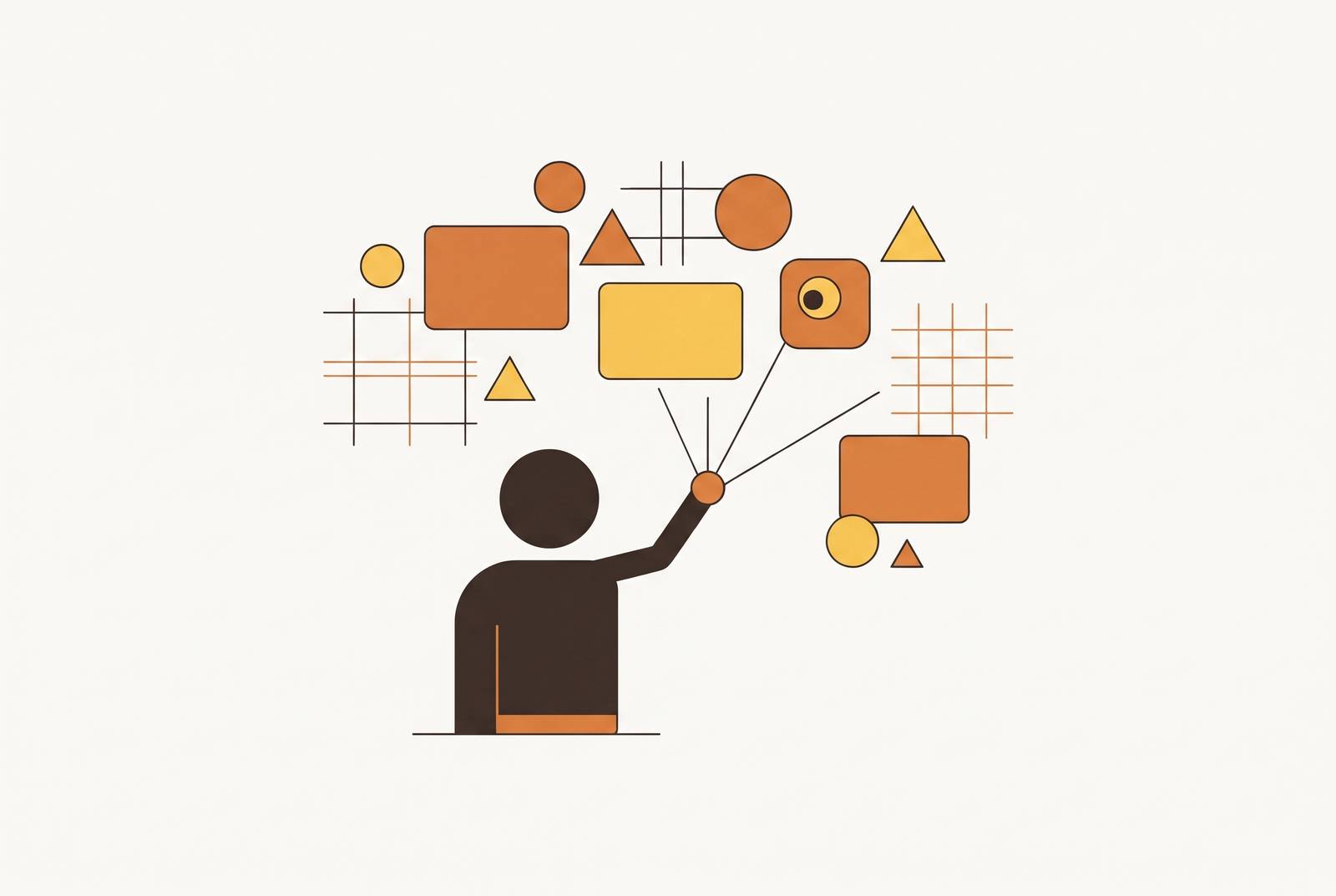
Creative directors are living a version of this at a larger scale. Consider a fintech company going through a rebrand. The old job would have meant the creative director personally shaping each touchpoint, the investor deck, the onboarding flow, the social presence, making sure each one felt right. The job now looks more like encoding the brand's personality into a system: playful on social, serious in front of investors, approachable during onboarding, all without the director touching a single one of those outputs directly. They're designing the rules that generate the artifacts, a genuinely different craft, closer to writing a style guide that executes itself than to drawing.
Less time in the tools and more time on the logic underneath them is the whole reorientation, and it explains why a role once measured in pixels moved is now better measured in frameworks built.
Agentic AI deepening the shift beyond simple generation
Single-output generation is one thing: type a prompt, get an image, accept or reject it. Agentic AI is a different animal entirely, because it makes decisions and carries out multi-step tasks on its own, chaining together actions that used to require a human at every junction. That difference in kind, not just degree, is what makes delegation scale past individual assets and into entire workflows.
Adobe's April 2026 post on creative agents states the mechanism: a creative agent orchestrates models, tools, and production processes across applications, while the human sets vision, applies taste, and makes the calls that only a human can make. The agent carries that vision forward through the steps in between. Adobe's own example shows what "carrying the vision forward" means in practice. A YouTube creator starts with nothing more than a description and a mood. The creative agent analyzes the raw footage, proposes a story arc, suggests music, assembles a draft edit, and generates cutdowns sized for social. The creator never touches the intermediate steps. They shape the final result.
That's the reframe Adobe's framing gets at directly: this is less a replacement of the creative director and more a multiplication of one. Agentic tools make the directing function more powerful precisely because so much of execution can now be handed off. A creative director who can define intent clearly enough for an agentic system to run with it isn't doing less work, they're doing work that scales. One vision, many executions, and the executions no longer require the director's hands.
Taste and judgment as the scarce resource when production is abundant
Not technical proficiency, because that's now cheap and abundant. The thing that stays scarce is the ability to recognize what's genuinely good, what resonates, what will hold up in six months instead of looking dated in six weeks, and what's actually right for this brand. That recognition is taste, and taste resists automation in a way that image generation never did.
There's a counterintuitive wrinkle here. As AI-generated content floods every channel, brands that manage to feel genuinely human are commanding outsized attention, simply because human feels rare now. But getting there often means more sophisticated AI orchestration, not less. Avoiding the tools doesn't make a brand feel more human; it just makes it slower and smaller. The orchestration has to be good enough that the seams don't show.
More options also mean more editing has to happen somewhere. When a director had three concepts to choose from, picking wasn't much of a skill. When a director has forty, the real creative act becomes the decision not to run with thirty-nine of them. This is a practical consequence of abundance, not mysticism about some intangible creative gift: more raw material demands ruthless, fast editing, and the person who can do that editing well is worth more than the person who can generate more raw material.
Brand consistency as a systems design problem, not a policing problem
Once a brand is producing at volume across a dozen channels and twice that many contributors, consistency stops being something a creative director can enforce by reviewing every asset before it ships. There simply isn't time, and that review model breaks the moment output scales past what one set of eyes can check. Consistency instead has to be designed into the system before generation happens, through templates, design tokens, approved variants, and behavioral rules that constrain what the AI can produce from the start.
Vajra's analysis of shared AI-enabled platforms notes that these systems now help teams align on brand standards, campaign objectives, and audience insights before work even starts, which makes collaboration faster and more structured and clears out bottlenecks that used to slow creative projects down. A creative director's real job becomes encoding brand behavior into the system itself, personality parameters, tone ranges, visual rules, so that people who aren't designers can produce content at volume and stay inside the guardrails without a designer checking their work after the fact.
That matters most for go-to-market teams. Salespeople, marketers, and operators can generate on-brand materials independently because the creative director already made the hard design decisions upstream. The AI enforces those decisions at the point of creation. A salesperson building a one-off deck for a prospect isn't making design choices anymore; they're filling in a system that already made the choices for them, a much better use of everyone's time than a design review queue three days deep.
New roles emerging inside creative teams as the production layer contracts
If routine production work is contracting, the obvious question is whether creative teams are shrinking along with it. The evidence points toward reorganization. Orbix Studio's 2026 look at AI design trends calls out a widening skills gap as one of the defining shifts underway: teams that know how to direct AI are pulling ahead of teams that merely know how to operate it. That gap isn't about who has access to which tool. Everyone has access to roughly the same tools. It's about who can tell the tool what to do with enough precision that the output is usable on the first or second pass.
The same source describes designers becoming AI collaborators, prompt strategists, creative curators, experience architects, roles that didn't exist as defined job titles a few years back. It's a pattern that echoes what Harvard Business Review calls "job crafting": employees redesigning their own roles for a more meaningful, less burned-out experience of work, not specifically designers expanding their footprint around AI. The resemblance is loose but real, people reshaping a job description around what the tools now make possible rather than waiting for someone to hand them a new title.
There's a genuine concern tangled up in this, and it deserves honest treatment. If AI now handles the execution work that junior designers traditionally cut their teeth on, some of the learning-by-doing pathways that used to produce the next generation of creative directors could narrow. That's a real structural question, distinct from the louder (and less accurate) claim that AI is coming for experienced creative leaders. Junior roles built on repetition are the ones most exposed, and the pipeline that trains future directors may need deliberate redesign.
What creative directors need to build to lead in this environment
So what does a creative director actually need to get good at, given everything above? Not fighting the tools, and not handing them the keys blindly either. Three capabilities separate the directors who are thriving from the ones treading water: systems thinking, directing clarity, and the judgment to know when to step back in and take the wheel.
Systems thinking means encoding brand behavior, visual rules, and tonal parameters into frameworks an AI can execute consistently without a human checking every output. This is the capability that separates a creative director from a creative contributor on an AI-augmented team: contributors make things, directors make the systems that make things.
Directing clarity is the ability to state creative intent precisely enough that an agent, or a teammate who isn't a trained designer, can carry it forward without losing the signal along the way. Adobe's phrasing captures it well: the human sets the vision, applies taste, and makes the calls that only they can make. Vague direction produces vague output no matter how sophisticated the model running underneath it is, so the clarity has to live upstream, in the brief itself, and not get patched in after the fact.
And then there's knowing when to grab the wheel back. Agentic AI removes the need for pixel-level control most of the time, but not all of the time, and the director who can recognize those remaining moments is the one producing work with an actual human premium attached to it. That premium doesn't come from refusing to use AI. It comes from recognizing the specific moments where craft and precision are the point, and stepping into direct control exactly there.
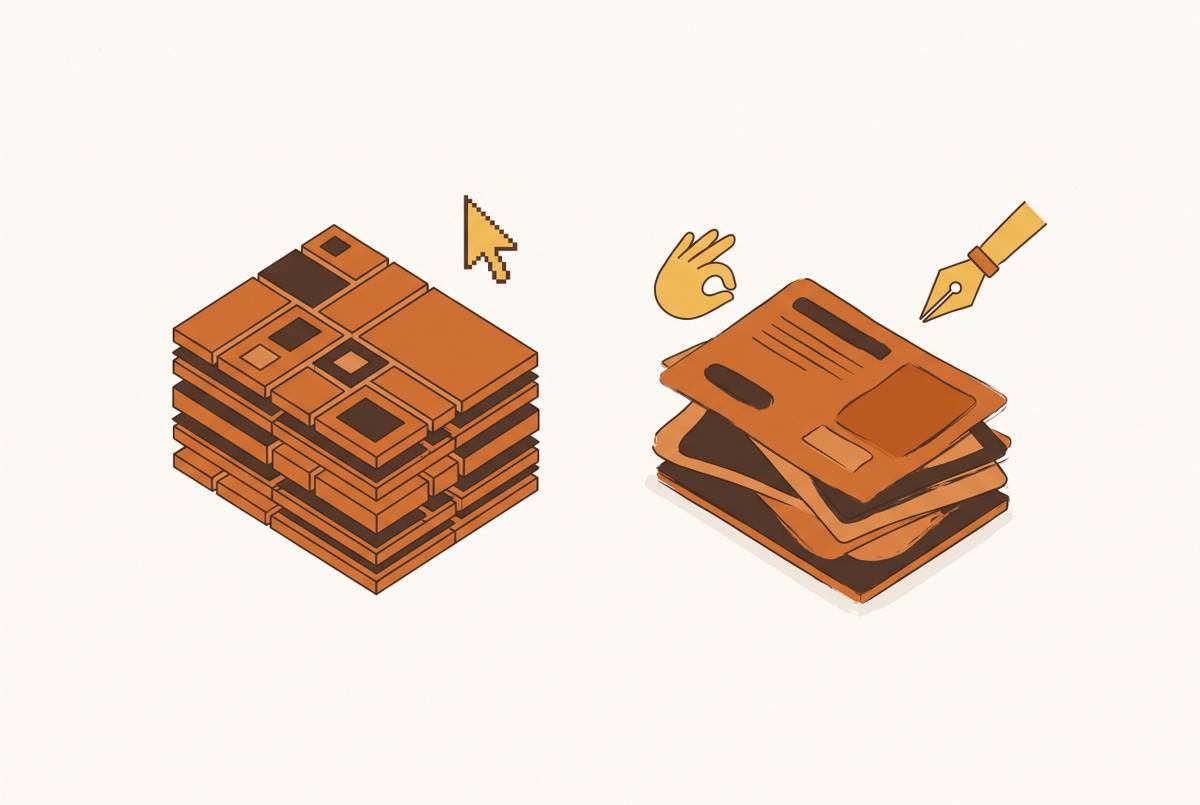
Teams that build internal AI capability on purpose, shared prompt engineering practices, documented guidelines, an AI champion who models the workflow for everyone else, get more consistent results than teams that leave each person to figure it out alone on their own laptop. And this is where the tools themselves start to matter in a very concrete way. A flat image generator that hands back a finished, sealed output gives a director nothing to direct: there are no layers, no editable elements, no way to adjust a headline, swap a color token, or nudge a composition without starting over from a new prompt and hoping for better luck. A workflow built around fully editable, fully controllable AI outputs is the only kind that actually supports this model, because directing requires intervening at any point in the process, not just accepting or rejecting a sealed, finished result. That's the practical difference between an AI tool built for generation and one built for direction: one gives you a picture, the other gives you something you can still work.
Even after stripping away the new vocabulary, the agents and the tokens and the prompt libraries, the job underneath hasn't changed. A creative director's job has always been knowing what to make. AI has just removed the production barrier that used to obscure that fact, the barrier that let craft stand in as a proxy for judgment. The directors who were always good at this were directing the whole time, even when the job looked like making. The tools have simply caught up to what the role was supposed to be.