How a Single Designer Can Enable a Whole GTM Team
Designers multiply their impact by building systems that let others self-serve.
A single designer can scale across an entire go-to-market team, but not by producing more work faster. The leverage comes from building the infrastructure, the templates, the brand guardrails, the editable systems, that let salespeople, marketers, and operators make their own on-brand assets without ever touching a design decision. That's the shift this piece walks through: what it requires, what it replaces, and how a designer actually starts building it.
Why the design bottleneck is a GTM problem, not a design problem
A marketer asking when the LinkedIn assets for next week's campaign will be ready gets some version of "waiting on design. An operator asking about the one-pager that was supposed to go out last Thursday gets a status update instead of a document. None of these people are designers, and none of them are the actual constraint. They're all waiting on the same one or two people who sit between an idea and a finished asset.
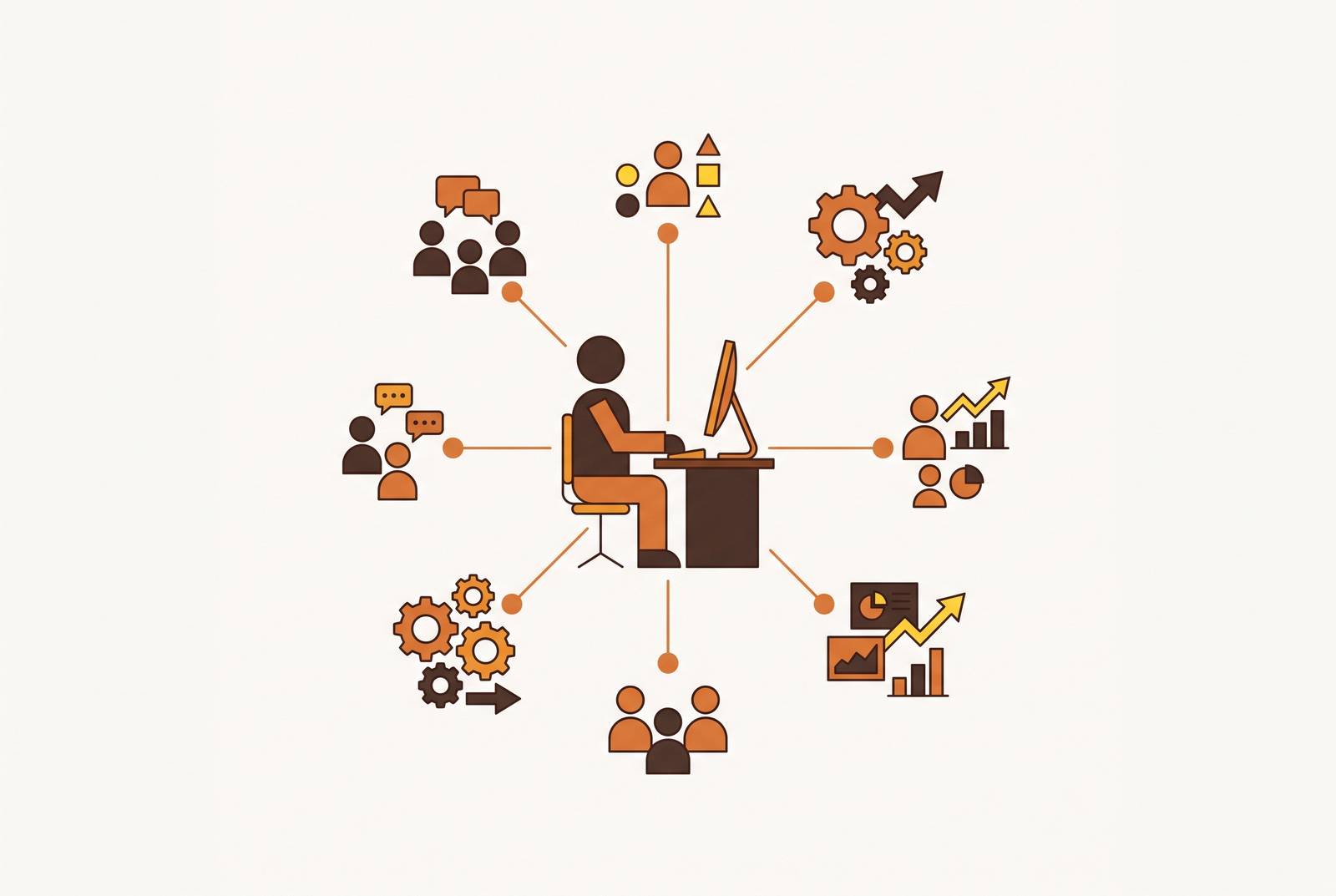
The bottleneck doesn't live in one function; it radiates through all of them. A sales team can only move as fast as its materials. A marketing calendar is only as reliable as the hands that build the graphics. An operations team trying to ship a partner one-pager is, in practice, a design request wearing an operations hat. When every function routes through a single point of failure, the organization's actual throughput is capped by that one point, no matter how good everyone else is at their job.
The reflex response is to hire. That instinct treats the issue as a capacity problem, something solved by adding hands, when it's actually a flow problem, something solved by changing how work moves through the system.
The costs here aren't abstract. A sales rep who can't get a persona-specific deck turned around before a Thursday call either sends something generic or pushes the meeting. A marketer sitting on a campaign concept that needs three days of design turnaround misses the window when the topic was actually trending. An operator who needs to hand a prospective partner a polished one-pager within the hour, not within the week, often can't. Every one of those is a missed moment that had nothing to do with a shortage of creative talent and everything to do with how the work was architected.
How AI has changed the designer's leverage ratio
The economics of execution have shifted, which is what makes a structural fix viable now rather than a nice idea. General Motors offers a concrete illustration of just how far that shift has gone inside a design studio. Now, GM designer Daniel Shapiro says that same path runs in less than a day, done by one person.
That's not a story about replacing designers with software. Director of Design Innovation and Technology Operations Bryan Styles describes it as applying the technology to enhance skills the team already has, accelerating process rather than substituting for taste. The mechanical, repetitive layer of execution, the resizing, the format conversion, the rough iteration, gets handed to the machine. The judgment about what's worth building stays with the person.
Marketing design runs on the same compression. With that layer handed to AI, the designer's day looks different. The open question stops being how fast one person can personally crank out assets. It becomes whether that person has built something durable enough for everyone else to use without them in the room.
What the shift from task-doer to system-builder requires
If the designer's output used to be the asset itself, that's no longer where the value sits. The actual deliverable becomes the system that produces assets: the templates, the brand tokens, the governed component libraries, and the rules that make it safe for a non-designer to self-serve. Once that shift happens, "what did you design this week" stops being the right question. "What decisions did you encode so nobody has to ask you again" becomes the one that matters.
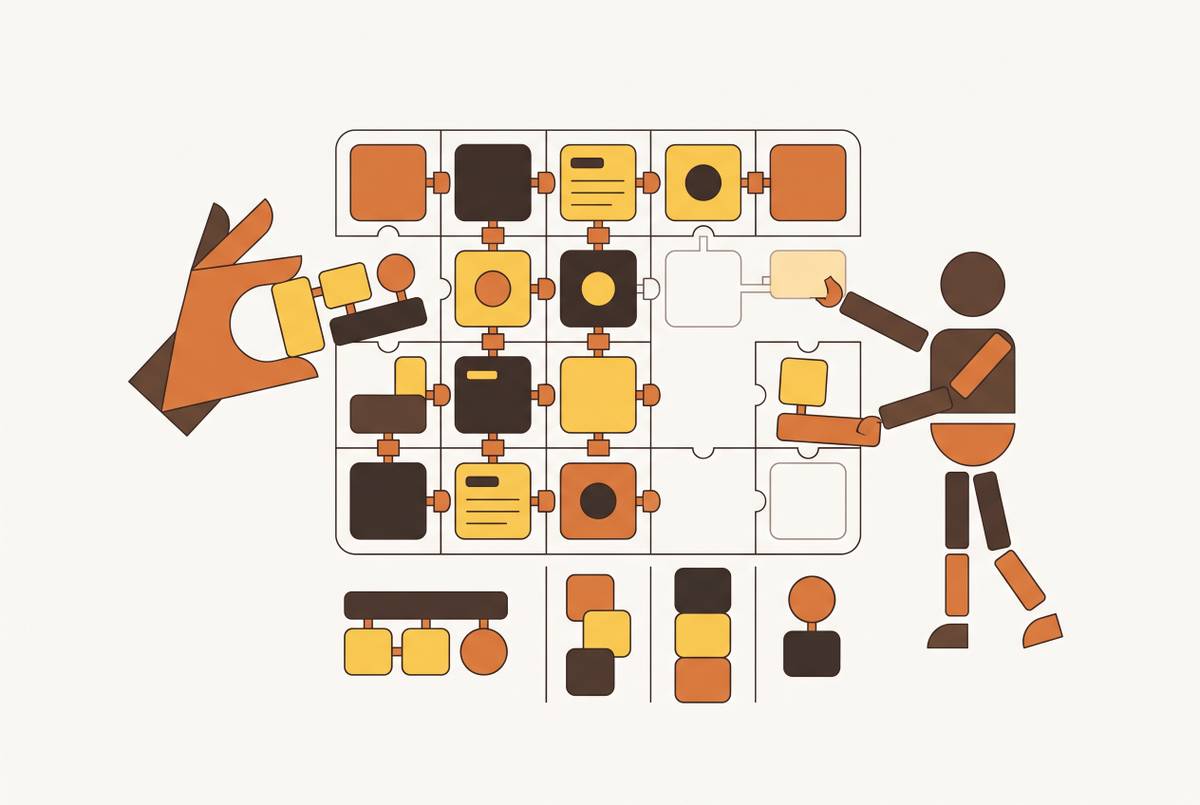
In practice, that system has a few load-bearing pieces. The first is a master-asset model: one approved hero asset per campaign or content type, built with full intention, from which every downstream version gets pulled. A sales deck, a social carousel, an event banner, all trace back to a single sanctioned original rather than each getting built from a blank canvas by whoever happens to need one that week. That single point of approval is what keeps a hundred derivative assets from drifting a hundred different directions.
The second piece is visual atomisation, which sounds more technical than it is. Once those pieces exist as separable components, a non-designer can recombine them for a new context, a different persona, a different channel, without accidentally breaking the brand in the process.
The third piece is less technical and more organizational: someone has to own the system. A library with no named owner drifts, quietly and then not so quietly, until the brand looks like it was assembled by committee, because it was. Governance here isn't a bureaucratic add-on, it's the mechanism that prevents the bottleneck from reappearing in a new shape six months later, this time as "which version of the logo is the current one."
What's easy to miss is that this represents a real move upstream in the kind of thinking the designer does. The question used to be about the thing in front of them: how should this particular slide look. The question becomes about the system behind it: what decision can be made once, encoded into a template, and never revisited by anyone downstream. That's a genuine change in the center of gravity of the job, not an incremental tweak to the old one.
The obvious objection deserves a straight answer. Doesn't building all this just pile more work onto a job that's already backed up? The honest reply is about sequencing, not magic. The system gets built once, maintained occasionally after that, and from that point forward it replaces the recurring production work that used to eat every week indefinitely. The investment is front-loaded. The payoff compounds for as long as the system stays in use, which, unlike a single deck, doesn't expire after one meeting.
The templates and guardrails that let non-designers produce on-brand work safely
Flip the view from the designer's side of the system to the teammate actually using it: a salesperson, marketer, or operator can produce a finished, on-brand asset without making a single design decision. Every choice that would have required an eye for layout, color, or spacing has already been made for them, upstream, by the one person whose job it is to make those calls.
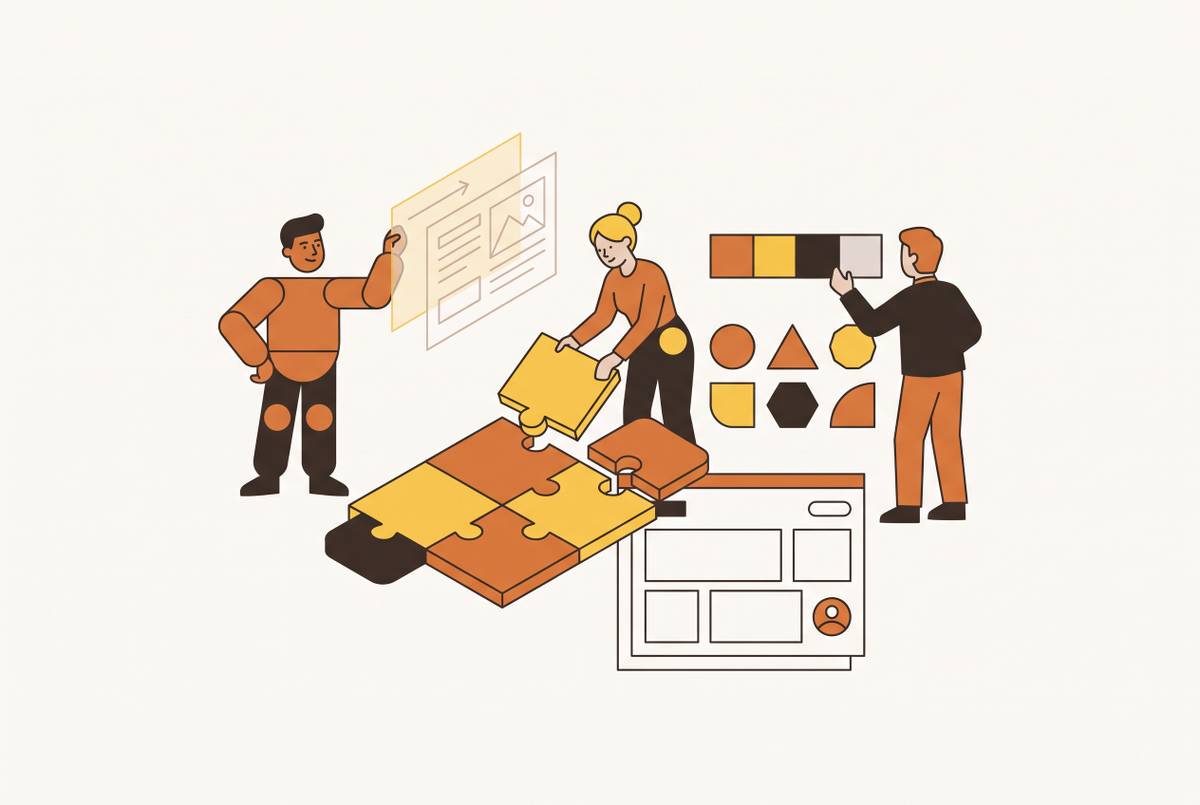
What makes that possible is a fairly specific split between what's fixed and what's flexible. A salesperson tailoring a deck for a CFO isn't rearranging the slide; they're choosing which case study goes in the box that was already shaped to fit one.
Channel variation gets solved the same way, ahead of time rather than improvised in the moment. A deck slide, a LinkedIn post, a one-pager, an event banner, each exists as its own pre-built format. The person who needs the asset selects the right template for the channel rather than trying to adapt one format into another and hoping the proportions survive the attempt.
Assets get assembled from pre-approved components, not built from scratch by whoever's hands happen to be on the keyboard. When a distributed team customizes within guardrails that were actually built to hold, brand integrity survives being scaled across dozens of people instead of one. The payoff is speed. Work that used to sit in a designer's queue for days gets finished by the person who needed it, in the pocket of time they actually had available, since assembling from pre-approved blocks takes an afternoon.
None of that works if the guardrails are advisory rather than actually constraining. A guardrail that can be casually ignored is a suggestion with better branding.
How the GTM team uses the system across its main content types
Sales decks make the clearest case study. The designer builds one master deck with a locked structure and a handful of flexible content zones, and from there, the salesperson swaps in the relevant case study, adjusts the framing for the buyer's role, and sends. No layout decisions required, because none were left on the table to make. Persona variants live in the library ahead of time rather than getting improvised under deadline: a version that leans on ROI sits ready for the finance buyer, a separate version built around quota impact sits ready for the sales leader, and the rep just needs to know which room they're walking into.
The strongest decks share a structure that the template bakes in automatically: lead with the buyer's problem, show the product working rather than describing it in the abstract, include proof that someone else trusted it, close with one clear ask. The salesperson inherits that structure the moment they open the file. They never have to reinvent it under a Thursday deadline, because the designer already solved it months earlier.
Social content scales the same way, through the same atomisation logic that builds deck variants. One campaign message becomes a LinkedIn carousel and a single-image post, both pulled from the same template family (LinkedIn Stories were discontinued in September 2021, so that format is permanently off the table regardless of what the template library supports). A non-designer running the social calendar can work through an entire week's output in a single sitting, picking the right template, filling the content zone, publishing, while the creative heavy lifting was already finished when the designer built the template.
What this model replaces
The clearest casualty of this model is the agency retainer built around production-heavy execution: resizing assets, reformatting them for new channels, generating variant after variant, producing campaign materials at volume. The economics that used to justify outsourcing that work (speed, specialized tooling, sheer hands-on-keyboard capacity) erode once an AI-assisted in-house system can do the same job faster and with more consistency, without a round-trip email thread and a billing cycle attached to it.
There's a compounding effect here that an outside agency structurally can't replicate. Every template built, every guardrail encoded, every teammate who learns to pull from the system rather than request from it, makes the next asset a little faster to produce than the one before. An agency relationship doesn't accumulate that way. The institutional knowledge about what works, what the brand actually means in practice, what persona needs which framing, stays parked outside the organization, billable hour by billable hour, rather than building equity inside it.
None of that means the designer's role shrinks to template maintenance. Deep brand ownership, the high-level creative direction that sets where the brand goes next, the judgment calls that require real context about a market or a moment: that work doesn't get automated away, it gets freed up. Removing production grind from a designer's queue doesn't remove the designer; the hours they get back go toward the thinking that actually required a designer.
How a designer builds this system without starting from scratch
The honest starting point isn't a blank canvas, it's an audit. Look at what the team has asked for over and over: the five or ten asset types that keep resurfacing are the ones that deserve to be templated first, because they represent the highest-frequency, highest-leverage place to put the initial effort. A request that comes up every week changes the math fast once it has a template.
Sequencing matters more than it might seem at first glance. Build the master asset before any of its variants. Skipping that order produces a library nobody quite trusts, full of templates that contradict each other because nobody settled the brand questions before opening the gates.
The platform choice carries real weight too, and it's easy to underestimate. The templates need to live somewhere a salesperson or a marketer can open a file, edit the zones they're allowed to touch, and export a finished asset without sitting through a training session first. An AI-powered design platform that outputs something fully editable on a real canvas, where every element can be adjusted inside the guardrails the designer already set, is the infrastructure this entire model depends on. It's what lets a designer build the system once and then step back while the team runs it, without needing a design background or a standing agency contract to keep the lights on.
The trade-off is this: the first few weeks look slower, because building the system takes longer than just answering the next request in the queue. But the request queue itself starts shrinking as self-service grows, and the effort that was front-loaded into templates and guardrails starts paying out in time nobody has to spend again. That's the whole bet, and it's a better one than hiring a second designer to answer the same queue a little faster.