When Self-Serve Design Breaks Down and How to Prevent It
Small decisions compound across regions until brand drift becomes unmanageable at scale.

Self-serve design programs rarely die from a single bad decision. They erode, the way a staircase wears down one footstep at a time until the tread is a different shape than the blueprint ever specified. Picture the regional office that nudges a template's blue two shades darker because it photographed better on a trade show banner. None of these people think they are damaging anything. Each decision is small, local, and reasonable in isolation, which is precisely what makes the pattern so hard to catch before it compounds across dozens of markets.
Scale is what turns an isolated fix into an unmanageable spread. With five hundred users across a dozen regions, nobody is reviewing every asset by hand, so the off-brand version ships to customers long before anyone in the home office even knows it exists. AI generation tools capable of producing hundreds of brand touchpoints a day make the arithmetic worse fast, since the number of places drift can originate multiplies far quicker than any manual review process can keep pace with.
Part of the failure traces back to an old assumption baked into how companies have always tried to protect their brand. The 50-page guideline PDF sitting in a shared drive assumes a trained designer is in the room at the moment something gets made, ready to interpret the rules and apply them correctly. Without that person in the room, the guideline stops functioning as a rule and starts functioning as a suggestion that busy people skim once and never open again.
Adriana Rivas, COO at BIGWISE Corp, has described the shape this failure usually takes, and it rarely looks like an explosion. It looks like a plateau. Usage settles in well below whatever the original business case promised, small errors pile up without anyone logging them, and the platform gets left to fend for itself after go-live, the digital equivalent of a gym membership nobody cancels but nobody uses either.
The two failure modes that pull in opposite directions
There are two ways to fail, and they pull in opposite directions. Loosen access too much and brand drift spreads, exactly as described above. Tighten it too much, and usage collapses instead, which creates its own version of the same problem.
The loose failure is the one most people picture first. Sales reps, regional teams, and franchise partners get fast, frictionless access to create what they need, but governance is so thin that output quality becomes a coin flip. Speed wins, consistency loses, and the brand fragments market by market.
The tight failure is less obvious but no less damaging. Locking every template field, routing every asset through a four-person approval committee, and building in enough friction that a simple one-pager takes two weeks to clear makes people stop using the system. Atlassian's design leadership has made a similar point about consistency itself: it is not an automatic virtue, and pushed past a certain point, it stops serving the people using the system and starts serving the system for its own sake.
A governance model that makes the governed system too painful to touch is an incentive to go around it, and going around it produces the very inconsistency the model was supposed to prevent. That is the trap. More locks lead teams to build workarounds. Fewer locks, and the brand drifts. The naive fix, usually some version of "just add more approval steps," solves nothing. Something structurally different is needed, and that is where the rest of this piece is headed.
The Cost of Brand Drift
Brand drift gets treated as a cosmetic problem, a matter of slightly wrong blues and inconsistent fonts. The real cost is operational, and it is visible first in how central marketing teams spend their week. A large share of their time goes to fixing off-brand assets after the fact and adapting content regional offices should have been able to produce correctly the first time. That is time not spent on strategy, not spent on planning, not spent on the creative work the team was actually hired to do.
In regulated industries, the cost sharpens into something closer to legal exposure. A regional sales rep who drops a compliance disclaimer because the slide looked crowded is not making a design choice. That person is making a risk decision, usually without realizing it, and usually under enough deadline pressure that the disclaimer feels optional rather than mandatory.
Something newer has entered the picture in 2026, and it changes the stakes again. Inconsistent brand signals scattered across web pages, social accounts, press coverage, and industry mentions cause AI systems trying to summarize or recommend a brand to construct a fragmented, sometimes contradictory picture of what that brand actually is. That fragmentation affects discoverability and whether an AI system surfaces the brand at all when a customer asks a question nearby. Jaguar's 2024-2025 rebrand showed this concretely: the erasure of decades of heritage left both human customers and the AI systems parsing the brand's public signals confused about what Jaguar was actually supposed to represent anymore.
The University of Tulsa offers a smaller, quieter example of the same underlying cost, measured not in compliance fines but in wasted design hours. Teams were recreating certain materials off-brand, repeatedly, because the approved version either didn't exist yet or was buried somewhere nobody could find it quickly enough to meet a deadline. That gap, invisible until someone thought to measure requests instead of just outputs, was quietly generating drift across the whole university.
Why brand guidelines cannot hold the line at scale
Handing a distributed team a brand guide, even an excellent one, is closer to the absence of a governance system, dressed up to look like a solution.
Guidelines are advisory by design. At any real scale, that person is almost never there. They fall apart at a hundred pieces a day spread across channels, markets, and people who have never met the brand team in person.
Manual review doesn't rescue the situation either, because review capacity doesn't scale the way content volume does. Once the number of assets outpaces the number of eyes available to check them, reviewers start skimming, different reviewers apply the same written rule in different ways depending on their mood or their deadline, and off-brand material slips through the cracks. Nobody failed at their job here. The system was simply never built to handle that volume.
The University of Tulsa case, raised above as a cost, doubles as a diagnosis. Hodges wasn't finding careless employees ignoring the rules. She was finding a gap between what the guidelines described and what the creation environment actually made possible, a gap teams filled by improvising. Guidelines govern behavior through awareness and intention, and at scale, neither one holds, which is the structural truth behind most drift. Teams are working around a system that doesn't match the speed or the shape of how they actually need to create things.
The conclusion that follows is not "write better guidelines" or "train people harder." Prevention cannot be bolted onto creation as a review step that happens after the work is already done. It has to live inside the creation environment itself, active at the moment someone opens a blank template rather than three weeks later when someone else opens a shared channel to flag the result.
Building governance into the creation environment rather than around it
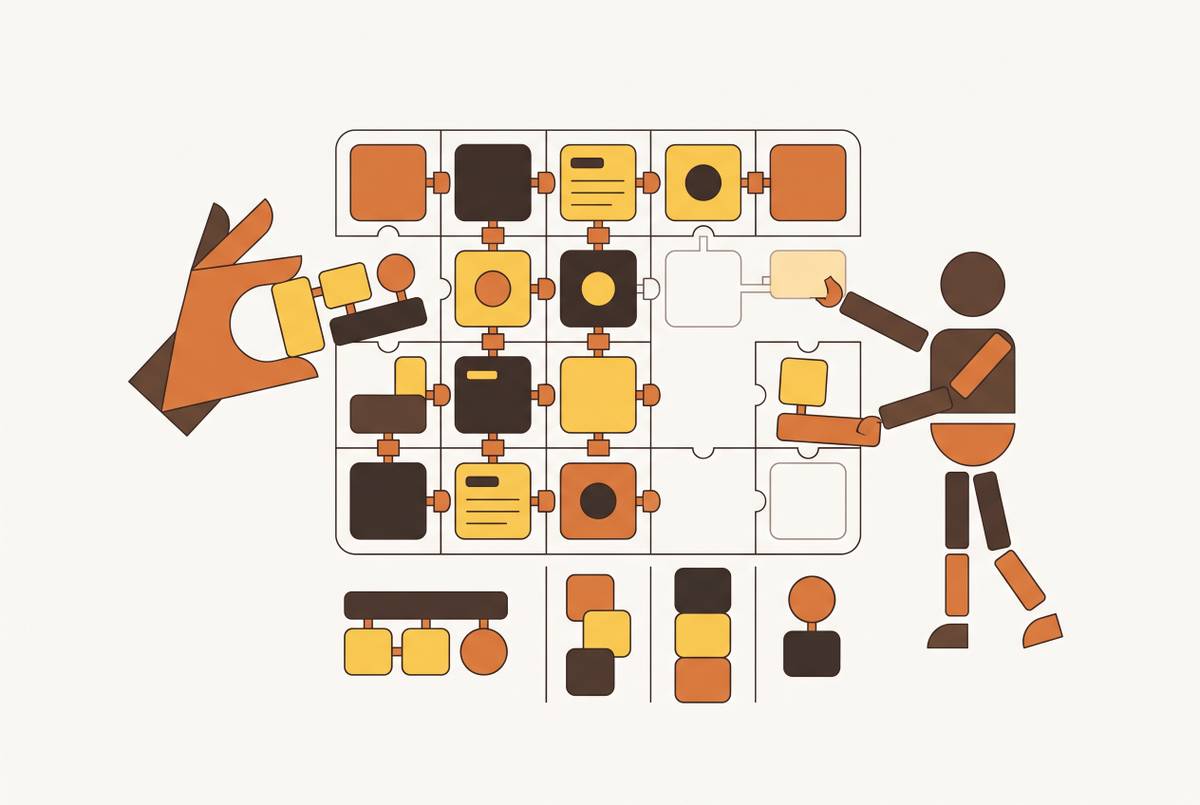
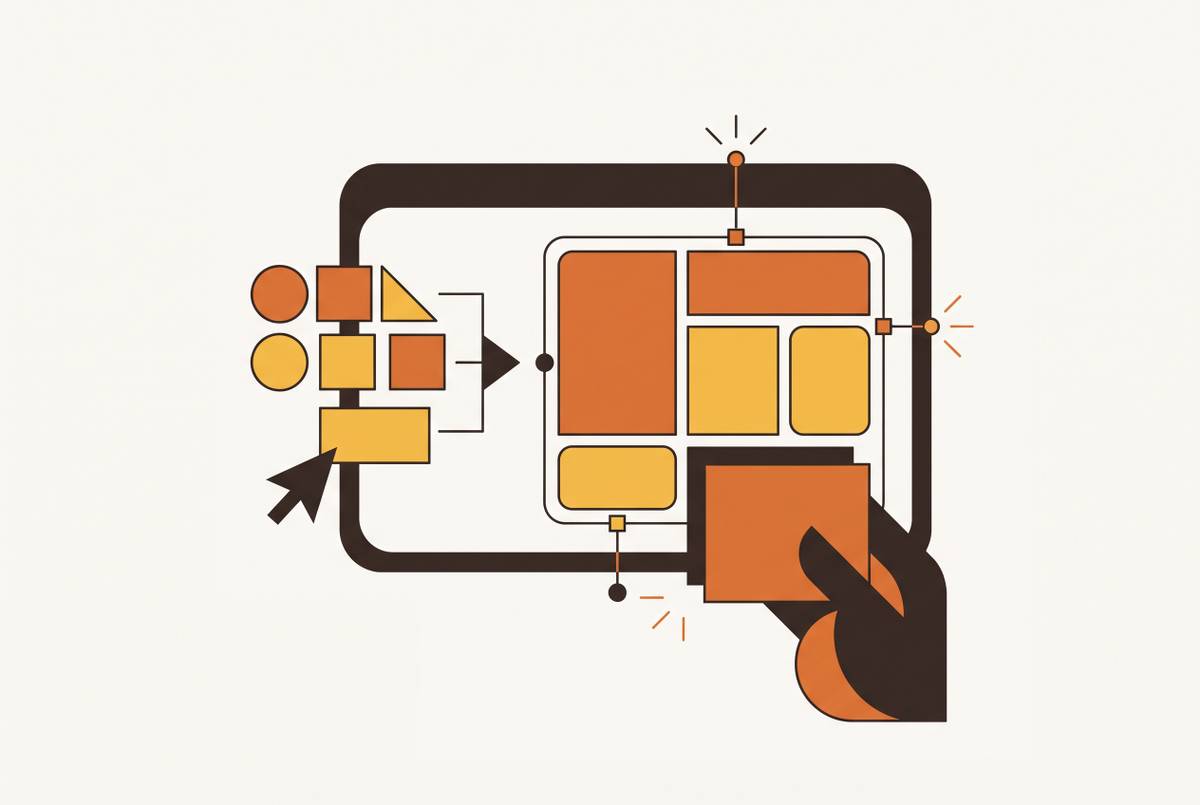
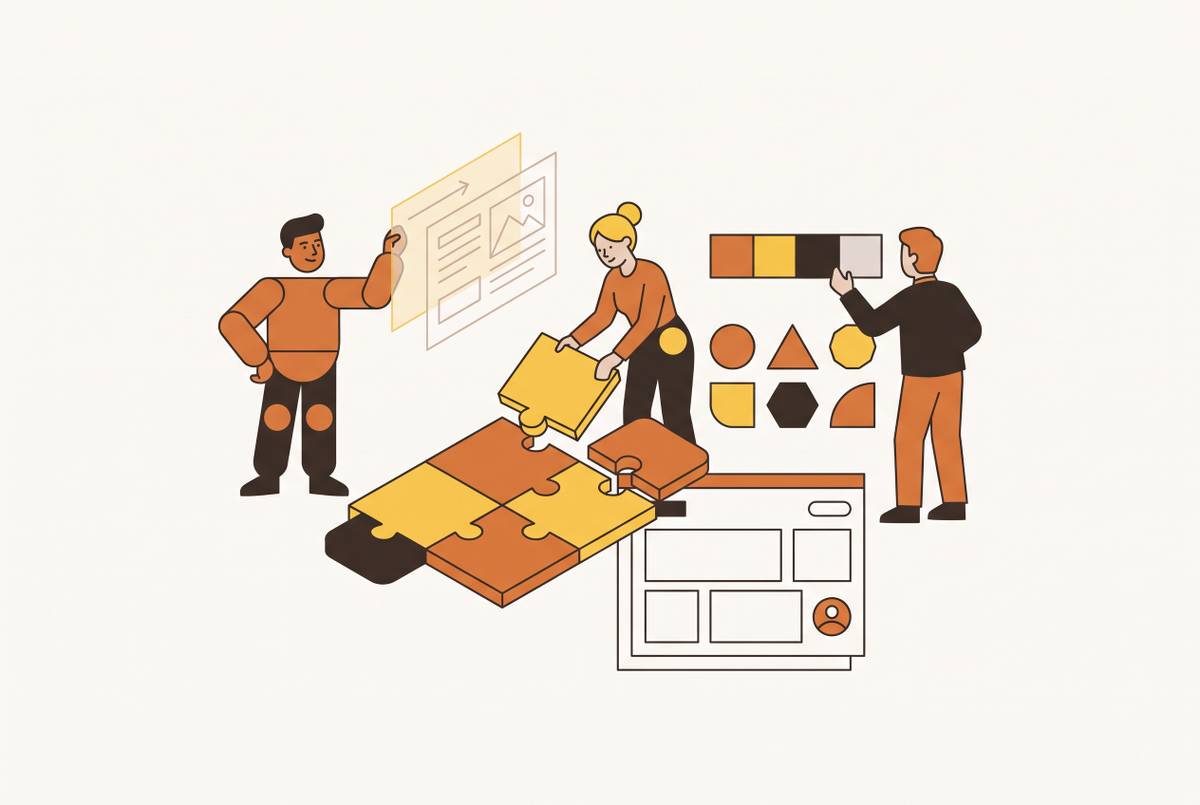
The model that actually works for distributed teams is governed self-service: locked templates with clearly editable zones, access tied to role, and one living source of truth that every asset pulls from. Governance gets enforced the instant someone starts creating, rather than inspected after the fact by someone with a red pen and a Friday deadline.
Three components hold this architecture together. The first is centralized brand intelligence, a structured and queryable system holding visual identity, messaging rules, compliance language, and tone of voice, built to update everywhere at once rather than sit static in a shared drive waiting to go stale. The second is automated validation that catches problems while content is being drafted, not after it has already been approved and shipped. The third is a feedback loop that watches where friction and workarounds actually appear in practice and feeds that back into how the system evolves.
Editable zones are the mechanism that resolves the two-failure-mode trap described earlier. Nobody has to choose between speed and fidelity, because the architecture separates the two concerns at the template level instead of forcing a human to referee them every single time.
Role-based access tightens the same idea further. A regional financial advisor can swap in a new headshot and update a phone number, but cannot touch the compliance paragraph or the brand photography, and the system enforces that boundary automatically rather than relying on a brand manager to catch violations one asset at a time. Johns Hopkins saw what this looks like in practice after rolling out a governed template library: content wait times dropped from three or four weeks down to a single day, and the four-person design team stopped spending its hours on repetitive edits and moved onto work that actually required their judgment.
Live data connections close off a specific, stubborn category of error that no static template can prevent on its own, the wrong disclaimer, an outdated price, a phone number nobody updated after the office moved. Connecting a template directly to a live data source removes the manual update step where those errors tend to originate. Templafy has built its approach around a related problem: a large share of brand risk doesn't live in slide decks. It lives inside everyday documents and email, so the company integrates directly into Microsoft Office to enforce templates, brand elements, and compliance language right at the point someone hits "new document," in the tool they were already going to use anyway.
How AI changes what governance can do
AI now lets brand teams check consistency at a volume no human reviewer could ever match. It cannot, on its own, fix the organizational habits that caused the drift to begin with.
Automated brand validation works roughly the way spell-check works, except for tone, terminology, visual usage, and compliance language instead of spelling. Checks run in real time as someone drafts content, so the creator gets feedback in the moment and fixes the issue while it is still cheap to fix, rather than three weeks later during a review cycle nobody enjoys. Used consistently, this also builds intuition over time. Creators start producing on-brand work with less oversight simply because the system has been correcting them gently and immediately for months.
Image generation introduces its own wrinkle. Without that layer, distributed teams and outside contractors will generate visuals that technically follow the brief and still look nothing like the brand.
None of this replaces judgment, and the honest version of this story has to say so. Treat a design system like a side project, and AI simply helps that side project fail faster, with better production values. Ryda Rashid's 2026 analysis of design systems lands on the same point from a different angle: AI can sharpen governance, but it cannot stand in for cross-functional alignment between the humans who are supposed to be aligned. The smartest systems behave predictively rather than reactively, catching problems before they ship rather than cataloguing them afterward; prediction works only when the system underneath has clear ownership and clear intent to begin with. Without that foundation, AI tooling just amplifies whatever is already there, making a well-built system faster and a poorly built one louder.
Lessons from the Rebrand Failures of 2024-2025
Drift doesn't only climb upward from a regional office or a franchise location that never got the brand files. It can start at the very top, in a boardroom, with full executive sign-off, and the clearest recent failures share one structural flaw: they removed the tension that made the brand recognizable.
Southwest Airlines spent decades positioning itself against everything other airlines did, fighting fees, stiff service, and assigned-seating complexity as a matter of identity rather than marketing. Critics argue the changes cost the airline more than policy goodwill. They argue it cost Southwest its cultural edge, the thing that made it legible as something other than one more airline. Customer loyalty eroded in the aftermath, and the brand lost the contrast that once let AI systems and human customers alike describe what made Southwest different from the competitors it used to define itself against.
Amazon's 2025 identity refresh, its first in twenty years, took the opposite path and landed somewhere healthier. The redesign unified more than fifty sub-brands under one visual system, introduced new typefaces and a deeper orange, sharpened the smile mark into something slightly more emphatic, and rolled out across packaging, uniforms, and digital surfaces in fifteen markets. It worked, to the extent a rebrand of that size can be said to work cleanly, because it deepened signals customers already recognized rather than discarding them. The core tension that made Amazon legible stayed intact. Where Southwest's changes removed the friction that gave the brand its shape, Amazon's changes sharpened the shape that was already there, and the contrast between the two outcomes is about as clean a lesson in governance as the industry is likely to get for a while.
Sources
- Design Systems in 2026: Predictions, Pitfalls, and Power Moves
- The 2025-2026 Rebrand Report Card: Who Passed, Who Failed, and Why
- Brand Consistency in 2026: AI Governance Solutions
- Why Self-Service Still Fails in 2026 and What Retailers Keep Getting Wrong - Retail TouchPoints
- When design consistency is harmful