Creative Request Intake Failures That Slow GTM Teams
Structured intake process, not hiring, recovers six weeks of designer capacity annually.
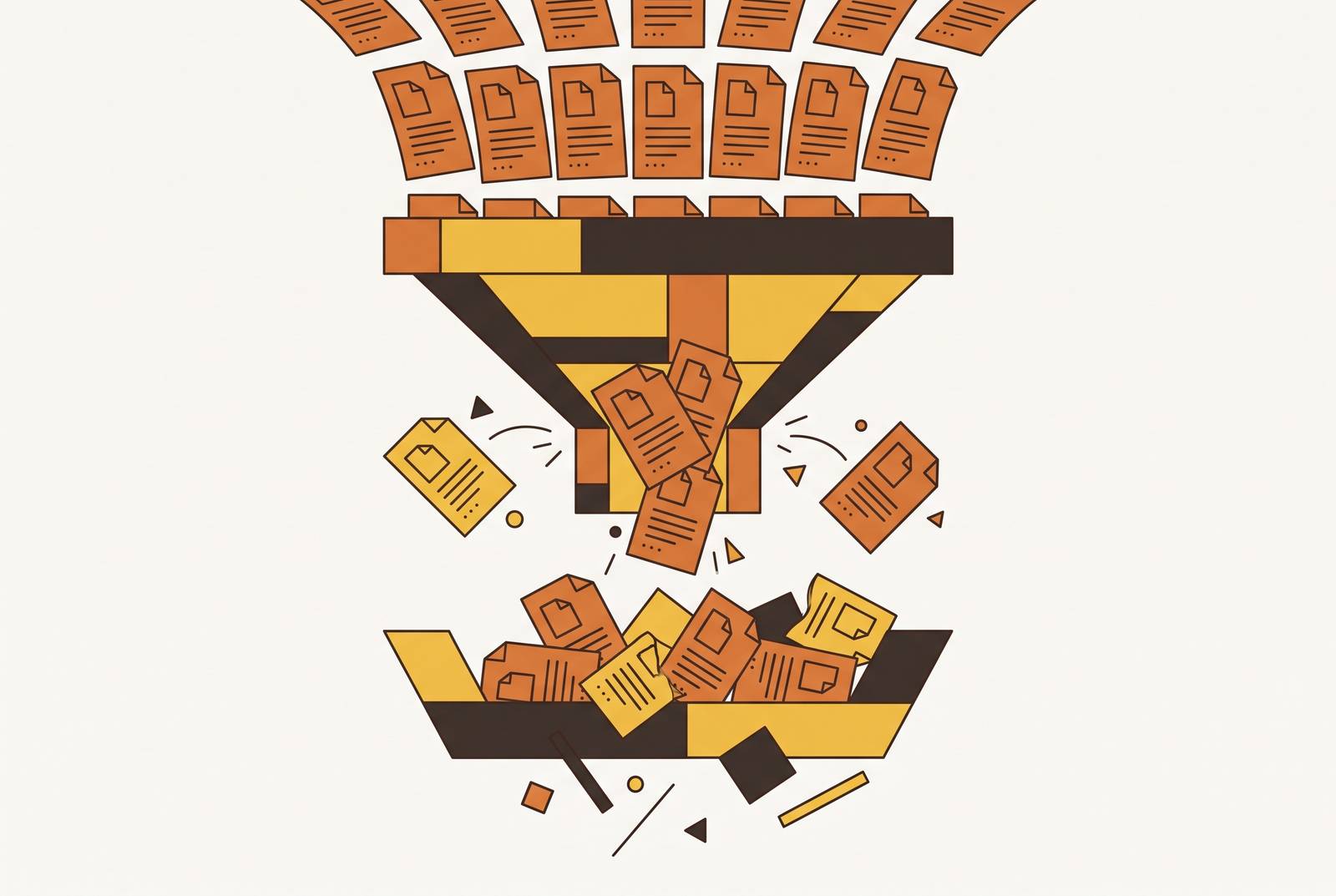
GTM teams that miss campaign deadlines almost never have a design headcount problem. They have an intake problem: requests arrive without structure, without priority, and without enough information for anyone to act on them, which means the designer's actual job becomes triage instead of design. This piece walks through exactly where that breaks, what fixing it gets back, and why the fix has almost nothing to do with hiring.
Why GTM creative teams stall even when they have enough designers
The instinct, when creative output slows down, is to hire. Bring in a second designer, maybe a project manager, maybe a shiny new tool, and the assumption is that more hands will absorb the backlog. Except the backlog doesn't care how many hands are attached to it, because the constraint was never capacity. It's process. Add a designer to a broken intake system and the system produces the same six hours of clarification per request, just with two people confused instead of one Creative Boom / 2026 Survey.
The data backs this up in a way that's hard to argue with. Superside's Overcommitted: 2025 State of Creative Teams Report, which surveyed 206 enterprise creative leaders, found that 76% personally felt burnt out in the past year, and 78% said their teams felt the same Superside / Overcommitted: 2025 State of Creative Teams Report Endgame. A Creative Boom survey of 882 creative professionals found 69% reported burnout in the past 12 months Creative Boom / 2026 Survey. That's not coincidence, that's a signal, and the signal is workflow, not talent.
It means designers are doing coordination work that should never have reached them: chasing down what a stakeholder actually meant, guessing at a deadline nobody stated, redoing an asset because the brief changed and nobody said so. That's not creative labor. That's administrative overhead wearing a creative director's badge.
The GTM setting makes this worse than it would be almost anywhere else in a company. Sales decks, campaign assets, launch collateral, these all have external deadlines lashed to actual pipeline. A delayed logo swap on an internal newsletter is an inconvenience. A delayed sales deck on the morning of a client pitch is a lost deal. Creative drag, in this context, is revenue drag, plain and simple.
The six intake failures that turn a design queue into a help desk
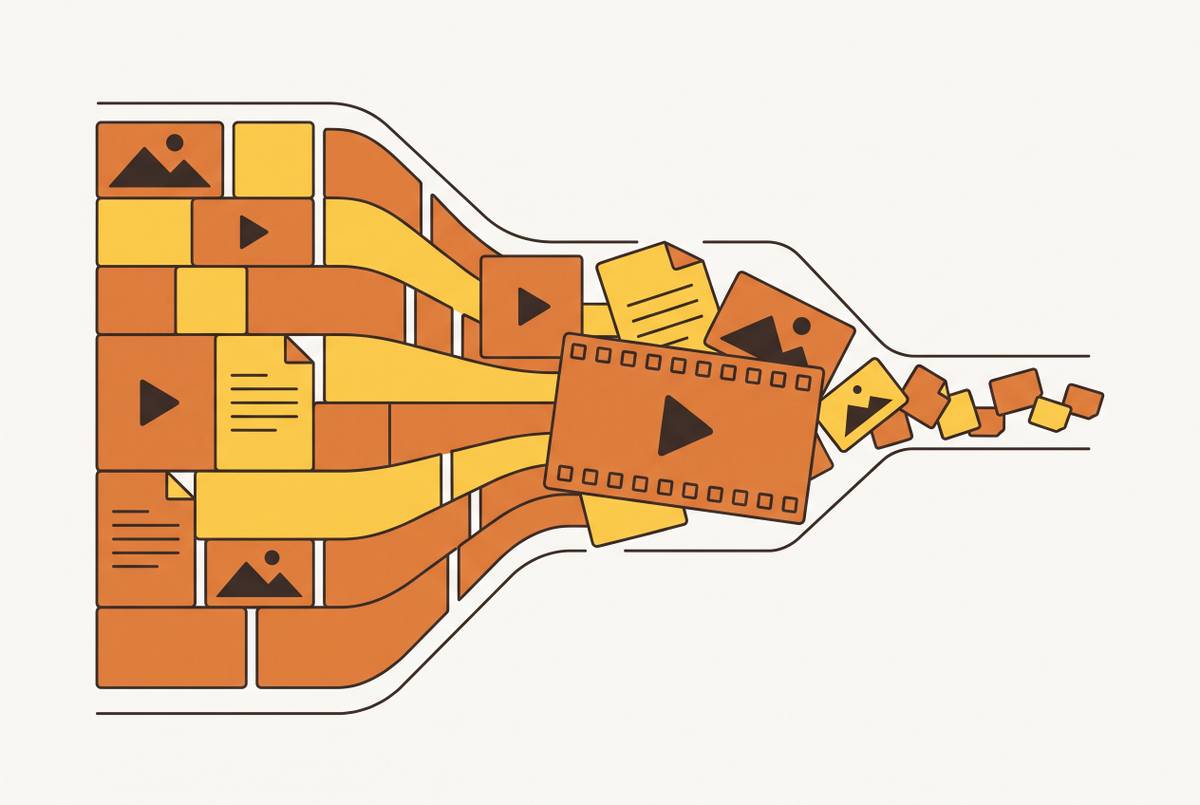
Consider the Monday inbox. Twelve requests have piled up since Friday, arriving through email, Slack DMs, a stray meeting note, a Teams comment, and one verbal ask at the coffee machine that nobody wrote down anywhere. Each one is described differently. Each one is "urgent." Sorting that out, before a single pixel gets touched, eats about six hours, and the team ships nothing that week. That's Failure 1: requests arrive through every channel except a defined one. An intake form doesn't solve this by existing. It solves this by being the only door.
Which leads to Failure 2, the form that exists but goes unenforced. The Pedowitz Group's 2026 framework makes the form the only path in, and anything submitted without a complete brief drops to the back of the queue. Sounds simple. Six weeks later, "just this once" is the norm, and the form is decoration.
Failure 3 is the absence of a triage owner. Without someone named, specifically, whose job is reviewing incoming requests inside a defined window (24 to 48 hours is the usual range), ambiguous briefs just sit. And stakeholders, being human, don't wait patiently. They escalate through the same back channels the form was supposed to replace, Slack messages, hallway ambushes, the whole cycle starting over.
Failure 4: priority gets decided by volume, not value. Whoever asks loudest, or asks last, or happens to have a direct line to the creative lead, wins the queue. ICE works fine for smaller teams. The specific model matters less than having one at all.
Failure 5 is the absence of SLAs, which makes "everything is urgent" impossible to challenge. And Failure 6 is invisibility: no visible queue, no status, so stakeholders ping constantly just to find out if their thing is done. That second wave of interruptions is its own tax on a designer's day, on top of the work itself.
None of these six failures require a new hire to solve. They require someone to decide, and then enforce, a structure. RICE (Reach, Impact, Confidence, Effort) produces a numeric score, while ICE works for smaller teams, but what matters is having one that removes "who asked" from the equation.
What a functioning intake process recovers for the team
MTM's analysis of teams running structured intake found it saves creative teams up to six work weeks a year. Not six weeks of new productivity, six weeks of coordination overhead that used to be invisible, now visible and reclaimed. That's a quarter of one full-time employee's annual capacity, recovered from a process fix Benefit Cosmetics.
The second recovery is skill allocation. Superside's data puts 70% of creatives on work below their skill level, which in practice means senior designers resizing banners and swapping dates on flyers instead of doing the work that actually required a designer in the first place. Fix intake, and higher-quality briefs arrive up front, which means fewer revision cycles, which means designers spend their hours on assets that move the GTM needle instead of assets that just need to exist.
Six weeks is roughly one full campaign cycle, the difference between launching on time and scrambling mtm.video. That's the gap between a launch that goes out on schedule and one that's still being finalized the morning of, with sales asking where the deck is.
Building an intake process that holds under real GTM pressure
Six components make up a functioning intake system, and missing any single one causes the whole thing to leak. Each component needs to be specific, because vague advice here is exactly how these systems fail in the first place.
The intake form itself needs just enough fields to scope and prioritize a request: requester, deliverable type, audience, deadline, success metric, budget, brand context, dependencies. One-channel enforcement means anything arriving outside the form gets redirected, not rejected, but it goes to the back of the queue, not the front. A documented prioritization framework, RICE or ICE, turns priority into a derived score instead of a social outcome, meaning nobody has to win an argument to get their asset made. SLAs by deliverable type make urgency testable and capacity plannable. And a visible queue with visible status means stakeholders can check for themselves instead of interrupting someone to ask.
Three patterns kill most intake initiatives before they get anywhere. Launching without enforcement is the first, because accepting even one exception "just this once" guarantees the whole form becomes optional within a quarter. Over-engineering the form is the second: pile on fields because more data feels safer, and abandonment climbs, and the form itself becomes the bottleneck it was meant to remove. Skipping the triage owner is the third, because a form with no human reviewing it produces a queue nobody trusts, which means people route around it anyway.
For a team starting today, the audit is straightforward: look at how requests currently enter the queue, count how many approvers touch each asset, and estimate how much of the work is repeatable enough for a template. Those three questions reveal where the leak actually is before anyone builds a single form. Component 3 is a named triage owner with a defined review window of 24–48 hours, who checks completeness, flags ambiguity, and routes to clarification or queue.
How approval chains and tool sprawl compound what broken intake starts
Approval theater is the specific term for routing an asset past stakeholders who are there for political cover, not operational necessity, and it inflates review cycles without touching output quality at all. The fix is an approval matrix, built before the campaign starts, capping standard marketing assets at two approval stakeholders. Anyone outside that matrix gets a notification that the asset exists, not an invitation to weigh in. Regulated industries and agency-client arrangements sometimes genuinely need more approvers, and that's compliance, not theater, so the matrix should account for it rather than pretend it away.
Tool sprawl is the quieter version of the same disease. Brief in one document tool, feedback scattered across email threads, files sitting in a cloud folder, status living in a messaging app nobody checks, revision history in a spreadsheet somebody forgot to update. A designer picks up a brief that was superseded two hours earlier by an email that never got forwarded to them, which happens when a system has no single source of truth. That's not somebody's mistake. That's what happens when a system has no single source of truth, and blaming the person who acted on stale information misses where the failure actually lives.
Put broken intake and tool sprawl in the same room and they don't just add up, they multiply. A request arrives through the wrong channel, so it has no brief. No brief means it gets routed informally. Informal routing means feedback scatters across three platforms. And somewhere in there, it collects feedback across three platforms and requires six approvals, because each failure amplifies the others. Each failure is bad on its own. Stacked, they're the reason a "quick" design ask takes three weeks.
Why templates and design systems are the operational layer intake alone can't replace
Fix intake perfectly and there's still a category of work that shouldn't be hitting a designer's queue at all: resizing, reformatting, swapping a date on a flyer. This is execution of a known pattern, not creative judgment, and it belongs to templates and design systems, not to intake reform.
The scale here is worth naming plainly. Superside's data shows customers producing up to 10,000 assets a quarter, and the lack of a design system to handle that volume causes a meaningful chunk to end up duplicated or off-brand. Intake can route a request efficiently. It can't fix what happens when the thing being produced has no shared source of truth to produce it from Superside.
A design system, in this context, is a shared resource that reaches beyond designers alone. It's a centralized set of reusable components, brand rules, and approved templates that lets a salesperson or a marketer build something on-brand without a review cycle attached. Once that self-service layer exists, the creative queue shrinks to the genuinely novel requests.
The specific mechanism that makes this work is the lockable template with smart fields, letting a rep swap in their name, an account name, a use case, while the logo, colors, and layout stay locked. AI-assisted tools that produce fully editable output, not a flattened image, extend this same logic: generate a draft, let the requester adjust it, keep it on brand the whole time, no designer required for the routine cases.
High-stakes assets (investor-facing materials, campaign keys, anything representing the brand at a moment that matters) still need designer judgment; the system handles multiplication, while designers handle what's being multiplied and the exceptions where "generated" isn't enough. The system handles the multiplying. Designers handle what's being multiplied, and the exceptions where "close enough" isn't close enough.
What GTM teams use AI for in their creative workflow
Endgame's analysis of more than 31,000 real AI interactions across GTM professionals at enterprise organizations (actual usage data, not self-reported survey answers) found that GTM teams spend more than twice as much AI time on contextual understanding as on producing deliverables Endgame / What 30,000+ AI interactions reveal about how GTM teams actually work. Deal Acceleration, the category covering content and deliverable production, accounts for 15.4% of activity. The largest single category, at 36.3%, is Team Enablement, automated digests, coaching notes, rep performance analysis Endgame. AI, in other words, is mostly making individuals faster at their own jobs. It hasn't yet done much for the handoff between roles, the exact handoff intake is supposed to fix. That's a human process problem.
The most common complaint from designers about AI tools isn't speed, it's unreliable output quality, and defining what "quality" even means, then enforcing it, stays squarely the designer's job. An AI-generated asset still needs a review pass unless it's editable and correctable at the source, which loops back to the same distinction the design-system section raised: editable output reduces rework, static output just adds a new category of it.
2026 looks like the year teams stop asking "should we try this AI tool" and start asking how it fits into the stack, the roles, and the process already in place. The teams navigating that well started with the workflow first and were explicit, upfront, about what stays a human call. That's really the whole argument of this piece in miniature: process before tooling, always in that order. [Statistic unverified, no Gartner 2025 report matching this claim could be found; this figure should be removed or replaced with a verifiable source] (AI speeds execution but doesn't eliminate the judgment calls that slow review).
The intake audit: a practical starting point for GTM and creative ops leaders
None of this requires a consultant or a quarter-long initiative. It's a three-part audit a creative ops lead or a chief of staff can run solo, in about a week.
First question: how do requests actually enter the queue right now, today, not in theory? Map every channel used over the past 30 days and count how many skipped any structured intake entirely Gartner. If most requests are bypassing the process, that's the fix, before a new form gets designed, before anything else.
Second question: how many people have to sign off on an asset before it ships? Count approvers per asset type and sort them into operational versus political. Anything above two approvers for a standard marketing asset is a flag for approval matrix reform.
Third question: how much of the current queue is repeatable? Sort the last 30 days of completed work into original creative judgment versus execution of a known pattern Gartner. Whatever share falls into "known pattern" is the upper limit of what templates and AI-assisted tools can realistically take off a designer's plate.
Sequence the fixes from there. Enforcement first, since it costs nothing but a decision. The approval matrix second, since it's one conversation with a stakeholder. Design system and templates third, the highest-leverage move and also the slowest to build. Teams that get this right tend to share one habit: they treat creative intake as GTM infrastructure.