When to Hire a Brand Designer vs a Production Designer
Know which role solves your actual problem before you hire the wrong designer.
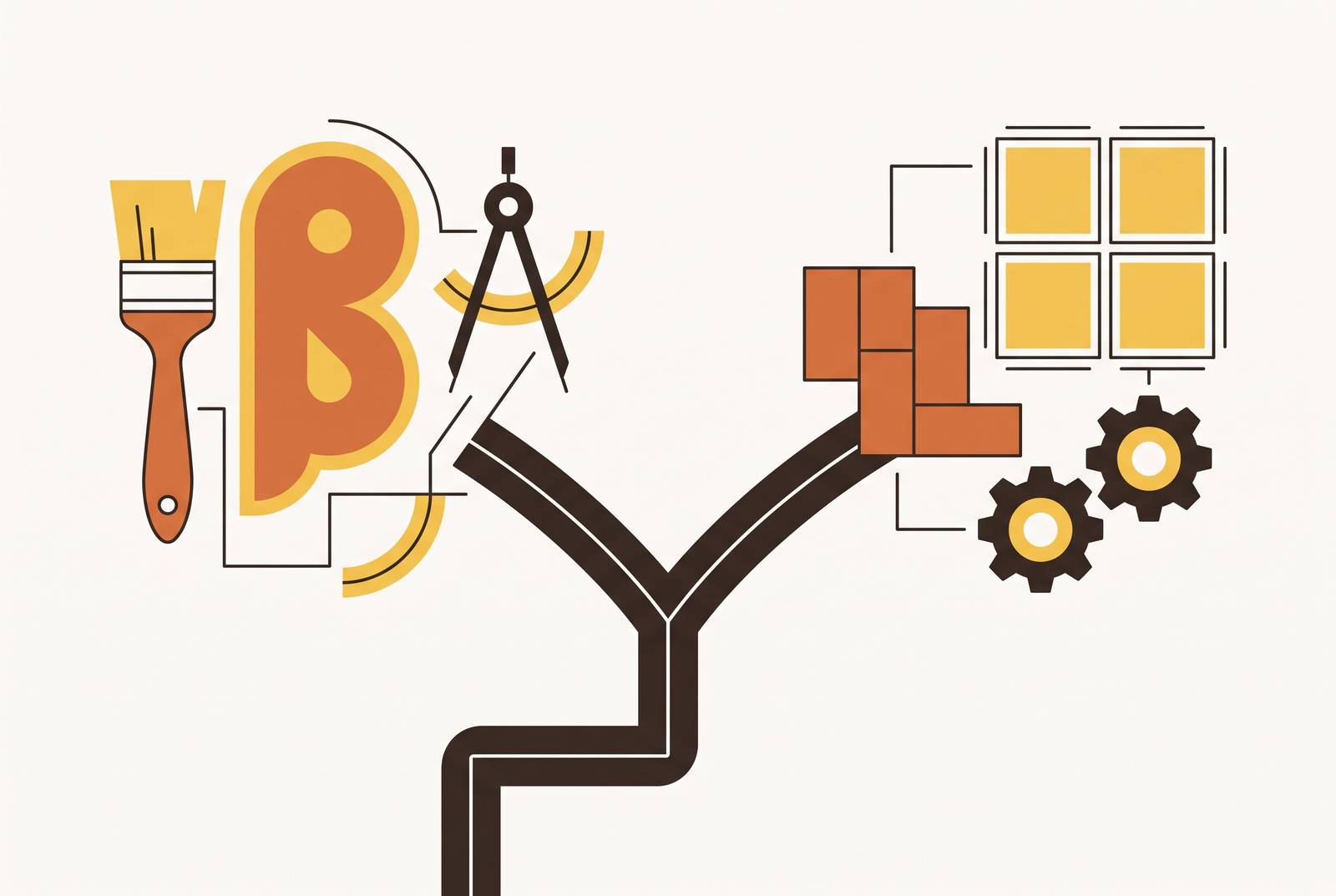
Two design roles get treated as interchangeable when they solve completely different problems. A brand designer builds the identity and strategy a company runs on. A production designer takes that identity and turns it into the hundreds of assets a go-to-market team needs every quarter. Confusing the two, and hiring for the wrong one, is one of the more expensive and avoidable mistakes in marketing operations. This piece breaks down how to tell them apart, what each costs in 2026, and how AI is reshaping the math on both.
One note before starting: this covers marketing and in-house design, not film or video production design, which is its own discipline involving set design and art direction for a shoot. Different job, different skill set.
Why most hiring mistakes happen before the job description is written
Most bad design hires trace back to one root cause: the job was wrong for the problem.
A company with no brand identity hires a production designer to "just make some assets." Six weeks later, the deck looks different from the landing page, which looks different from the social graphics, because there was never a system to execute from. Nobody told the new hire what "on-brand" means, because nobody in the company can define it yet.
Flip it around. A company with a strong, well-documented brand hires a brand designer to increase output. What they get is someone asking deep questions about positioning and audience segmentation when the team actually needed fifteen ad variations by Friday. That mismatch costs just as much, in a different currency: time.
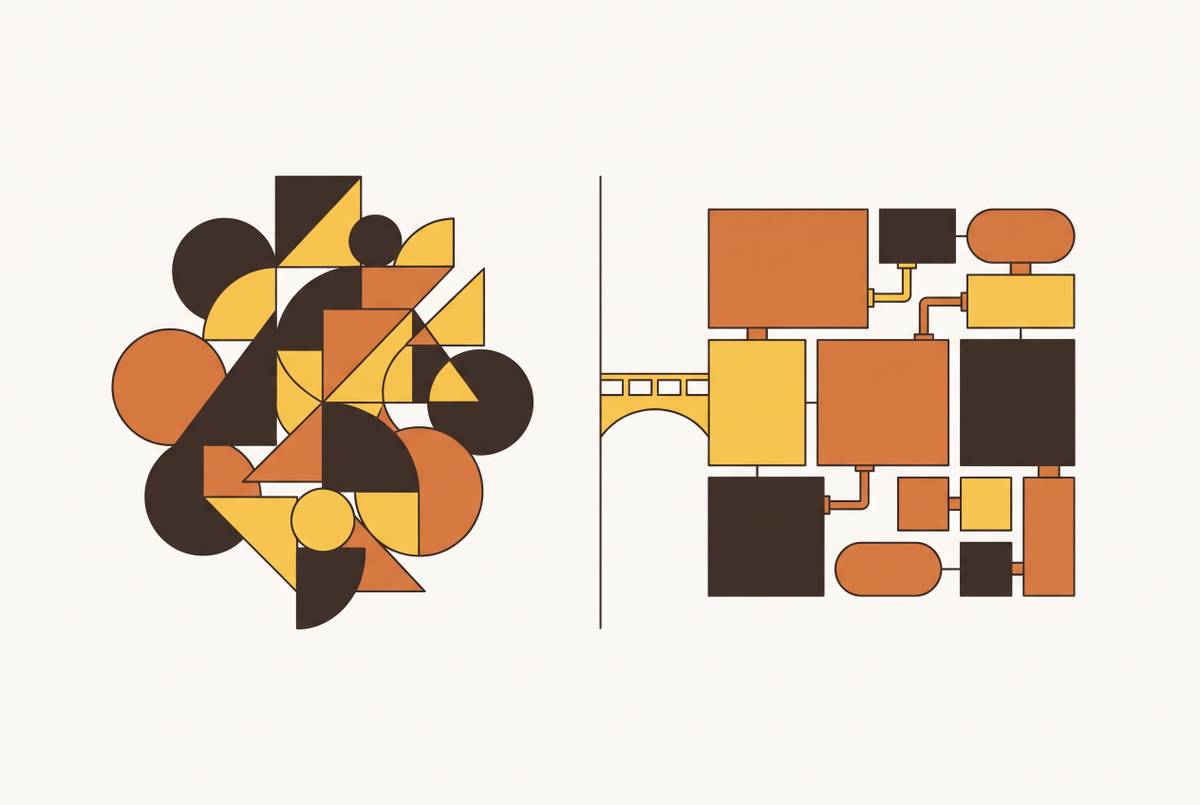
Design problems split into two categories, and they call for opposite skill sets. A decision problem means nobody knows yet what to build, since the logo doesn't exist, the color system is inconsistent, and the tone shifts by department. That calls for judgment, not speed, and it's a brand designer's territory. A production problem means the decisions are already made. The templates exist, the guidelines are written, and now someone just needs to build the assets, fast and correctly, over and over. Throughput solves that, and throughput is a production designer's job.
Before writing a single line of a job description, ask whether a brand system actually exists. If the honest answer is "we have a logo and some colors but nothing written down," that's much closer to having no system. If the answer is "we have a brand guide, approved templates, and a defined tone," the problem in front of the team is about volume, not identity. Getting that diagnosis wrong is where the money gets wasted, and the wasted money compounds the longer the mismatch goes uncorrected.
Signals that a brand designer is what you need
The clearest signal is absence. No brand guidelines, no documented visual identity, no positioning statement anyone can point to. When that's the state of things, every designer who touches the brand ends up making their own calls: different blues, different fonts, different tone in the copy. There's no rulebook to be consistent with, so nothing stays consistent.
A second signal occurs when the business goes through a real shift. Entering a new market, chasing a new customer segment, or simply outgrowing the visual identity that worked at launch but doesn't fit the company anymore, all of these point toward a rebrand. A real rebrand rarely touches just one thing. It hits the logo, the website, the social presence, and the sales collateral all at once, and that kind of simultaneous, foundational overhaul belongs to a brand designer, not whoever's available to open a design tool that afternoon.
The third signal is more of a gut check: the brand doesn't land with the people it's supposed to reach. It looks too much like the competitor down the street. Prospects don't feel any particular connection to it. As the team at Lauren Leader Studio puts it, when the brand doesn't actually fit what the company really is, that's a brand designer's problem to solve. No amount of additional assets fixes a brand that doesn't fit. Making more of the wrong thing just makes more of the wrong thing, faster.
What comes out the other end of a brand designer engagement is concrete, including a strategy and positioning framework, a visual identity system covering logo, color, typography, and imagery style, a brand guidelines document, and a set of central templates other designers can build from. That output is the rulebook. Everything downstream depends on it existing first.
Signals that a production designer is what you need
Flip the situation. The brand system already exists, it's documented, and the team is drowning anyway because there's simply too much to produce. Go-to-market needs a steady stream of sales decks, social graphics, landing pages, and ad creative, and the designers capable of strategic work are stuck resizing banners instead of doing the work they were hired for.
That's a volume problem, and volume problems have a particular signature: the same campaign has to run across six channels in three different formats, on a deadline, without drifting off-brand in the process. Getting that right, at speed, without a hitch, is what a production designer trains to do.
Brand drift sets in gradually when this fix is skipped. Research on brand consistency has found that 85% of marketers say vendors misapply brand identity due to a lack of centralized systems and documentation. High asset volume without a dedicated production function doesn't just slow things down, it erodes the guidelines one slightly-off deck at a time, until nobody's quite sure what "on-brand" means in practice anymore.
There's a rough threshold for when this justifies a full-time hire over a contractor: sustained, high-volume design work with no end date in sight. Pair that with a job that demands deep institutional knowledge of the brand, where design itself functions as competitive edge, and that's the point a dedicated production designer earns a seat on the team.
What that person actually produces, based on job families like the one GitLab has published, spans email templates, landing pages, social graphics, paid digital ads, slide decks, whitepapers in both digital and print form, one-pagers, trade show booth design, and swag. Pixel-perfect, built to spec, versioned across formats and languages. That's a different craft from deciding what the brand should look like in the first place, and it deserves to be staffed and paid as such.
What each role costs across staffing models in 2026
Salary bands for in-house designers in 2026, drawing on Built In's figures, run roughly like this: junior designers land between $50,000 and $65,000, mid-level between $70,000 and $90,000, and senior designers between $90,000 and $130,000, with Built In pegging the average senior graphic designer salary around $102,000. Design leads in major tech hubs push higher still, typically $140,000 to $180,000.
None of that is the real number, though. Once benefits, payroll taxes, equipment, recruiting, and onboarding get folded in, the true first-year cost of a single in-house hire runs $130,000 to $230,000. Scaling that to a mid-sized in-house team, a senior designer, a creative director, a mid-level designer, and a project manager, causes the annual number to clear $500,000 once tools and overhead are counted. There's a ramp-up tax on top of all that too: new hires typically take meaningful time before producing at full capacity. That's salaried time paying for partial output.
Agencies price differently. Small clients typically see retainers between $1,000 and $5,000 a month. Mid-market retainers run $5,000 to $15,000. Enterprise engagements climb to $15,000 to $50,000 a month or more.
Then there's the design-as-a-service and freelance layer. Freelancers charge $25 to $150 an hour. Agency project fees range from $5,000 to well over $100,000 depending on scope. Small in-house teams, all in, run $150,000 to $400,000 a year.
A subscription or design-as-a-service arrangement buys throughput, an agency buys judgment on demand, and an in-house team buys continuity. None is universally cheaper. Each is built for a different problem, and paying for continuity when the actual need is throughput is how budgets quietly bloat. A decision problem, brand strategy work, calls for a senior brand designer or an agency engagement, because judgment is the product being bought. A production problem, pure asset volume, gets solved more cheaply through design-as-a-service, contractors, or junior in-house capacity, because throughput is the product there instead.
When the hybrid model makes sense
The dominant staffing pattern in 2026 pairs one in-house lead with external surge capacity, and a growing number of companies now run some version of it.
Call it the inside-out model: a single, well-compensated in-house design lead holds the line on brand integrity, while freelancers, design-as-a-service platforms, or agency partners absorb the volume spikes. The in-house lead carries the institutional knowledge and has standing to say "this is off-brand" and have it actually stick. External capacity handles the surge without the fixed cost of staffing a full team for peak demand that doesn't run year-round. Roughly 70% of large companies now run distributed or hybrid design teams built on some version of this logic, and a shared, documented design system is what keeps the arrangement from falling apart at the seams.
A company hires one senior designer, expects them to operate at a strategic level, and gives them no design leadership or peer to push back on their thinking, and this setup fails almost every time. That designer, however talented, tends to quietly slide into order-taking within a year, because there was no scaffolding around them to protect the strategic mandate they were hired for. That's an organizational failure, not a talent failure, and it gets fixed organizationally, not by hiring a second senior designer to repeat the same mistake.
The hybrid model has real edges where it stops working. If volume grows past what surge capacity can reasonably absorb, week over week, a dedicated in-house production designer becomes the more economical option. And if the brand itself is still underdeveloped, throwing external production capacity at it, however fast, just produces inconsistent assets faster. Speed without a system to run on doesn't fix anything. It multiplies the mess.
How AI is changing what each role requires
AI multiplies what a single designer can produce. It does not replace the judgment that decides output quality, and treating those as the same claim leaves teams understaffed on judgment and overconfident in tooling.
By one recent measure, 89% of designers report working faster with AI folded into their process, and 25% say it's actually improved job satisfaction. The more common complaint isn't speed, it's reliability: AI output is inconsistent, and someone still has to catch the misses. Industry observers have noted a widespread concern that AI makes weak work look polished on the surface. That's a real risk, because work that looks finished is harder to challenge than work that visibly needs more effort, even when the underlying idea is off.
In production work specifically, AI handles resizing and reformatting assets across channels well, generates variations for A/B testing fast, and knocks out repetitive, templated pieces that don't need original creative judgment behind them. Figma AI, active through 2025 and 2026, can now generate design elements, rename layers, draft button copy, and build UI mockups straight from a text prompt.
What none of that replaces: brand strategy and positioning decisions, which require reading a market, not pattern-matching against one. Nor does it replace the human checkpoint before AI output goes live, or the standing to say a piece is technically well-executed and still wrong for the brand. That judgment call needs a person with real authority over the brand.
Practically, this raises the bar for what counts as a full production hire. One designer with solid AI tooling now matches the output of a two-person team working without it. Measure the 40-hour-per-week benchmark for a full-time hire against AI-assisted capacity, not against pre-AI norms, or the math is already out of date. The real gap opening up runs between teams that know how to direct AI with real specificity and teams that just accept whatever it hands back on the first try.
What non-designers on go-to-market teams can handle without either hire
A good chunk of what looks like design work is actually template execution. Slide decks, one-pagers, social posts, and ad creative built inside an already-established brand system don't necessarily need a trained designer's hands, provided the tooling and templates hold up. That condition matters because this only works once a brand system exists. The brand designer's foundational work is required, or this option collapses immediately, no matter how good the AI tool is.
Modern AI-powered design platforms have opened up a real option here for non-designers on marketing and sales teams. The output that matters isn't a static AI-generated image but a fully editable one, where copy, color, layout, and imagery can all get adjusted directly on a working canvas. Brand consistency gets enforced at the template level, so a salesperson or an operations person can produce something on-brand with zero design training. Work that used to sit in a production designer's queue for days gets built in minutes instead.
That's the setup that cuts real dependency on agencies and shrinks the case for additional in-house production headcount, but only for teams whose brand system was already solid going in.
AI-generated design is only as useful as it is editable. Tools that hand back locked or static output just push teams straight back into a designer's queue the moment a revision comes up, which defeat... AI-generated design is only as useful as it is editable. Tools that hand back locked or static output just push teams straight back into a designer's queue the moment a revision comes up, which defeats the entire point of adopting the tool. The line between editable, on-canvas AI design and plain image-generation AI is the line between a genuine workflow upgrade and a dead end that looks like progress for about a week.
This approach also has a ceiling. High-stakes, high-complexity assets, investor decks, major campaign creative, anything meant to define the brand rather than extend it, still need a trained eye behind them. If the brand system itself isn't clear yet, fixing that is the brand designer's job, and it has to happen before any of this AI-assisted workflow means anything.
A decision framework for choosing the right path
Start with one question: does a documented brand system actually exist? Not a logo file sitting in someone's downloads folder, an actual system, with guidelines, templates, and a defined tone that a new hire could pick up and follow without asking twenty questions.
If the answer is no, or "sort of," the next move is a brand designer, not a production hire, no matter how much asset backlog is piling up. Building volume on top of an undefined identity just produces inconsistency at scale, faster than doing nothing would have.
If a real system already exists and the backlog is about throughput, not identity, look at volume before deciding on headcount. Sustained demand above roughly 40 hours a week, indefinitely, with high brand-context requirements, points toward a full-time production designer. Below that threshold, design-as-a-service, freelance capacity, or AI-assisted non-designer workflows cover the gap for less money and far less ramp-up time.
Somewhere in between sits the hybrid model: one in-house lead with real authority over the brand, backed by external surge capacity for the peaks. That's the default setup for a reason. It matches judgment to the person who should hold it, and matches volume work to whichever staffing model prices it best.
None of this is a one-time decision, either. Brand systems age, businesses shift markets, and AI keeps changing what one person can reasonably produce in a day. The mismatch between what's actually needed and who got hired to deliver it is exactly where the expensive mistakes keep happening, and it needs checking every time the backlog changes shape or the business changes direction.