LinkedIn Content Production Workflows for Non-Designer Marketers
Build a system to capture ideas, plan posts, and produce visuals consistently.

Non-designer marketers who post well for a few weeks and then go quiet don't have a creativity problem. They have a missing operating system, and the absence of that system is what produces the burnout, the drift, and the stalled growth that follows.
LinkedIn has become the dominant channel for B2B lead generation, and that single fact changes the math for every marketer posting on it. More teams are competing for the same scroll, and the posting expectations attached to that competition have climbed accordingly. A marketer who used to get credit for showing up twice a month now needs a rhythm closer to twice a week, sustained for months, to build anything resembling momentum.
The failure pattern is so consistent it could be plotted on a chart. Someone posts well for two or three weeks, running on a backlog of ideas built up from genuine enthusiasm. Then the backlog runs dry, and every post becomes a blank page again: a brief to assemble, evidence to dig up, a structure to pick, a draft to write, all four jobs done from scratch under a deadline that doesn't care how tired the person is. Burnout follows, the posting stops, and whatever algorithmic momentum had built up evaporates along with it. LinkedIn doesn't hold a grudge, exactly, but it doesn't wait around either.
The platform itself has stopped being neutral ground for this problem. External links now get meaningfully reduced initial reach, because LinkedIn wants attention to stay on LinkedIn rather than leak out to some blog post or landing page. Saves count for roughly five times more than a like, and saves only happen when a post is built to be referenced later: a framework, a checklist, a process broken into steps someone will actually want to find again next month. None of that happens by accident. A system that captures ideas before they're needed, rotates formats on purpose, and treats a save as the real scoreboard is what makes consistency possible. Ad hoc posting can't produce any of it reliably, because ad hoc posting is, by definition, whatever the marketer has energy for on a given Tuesday.
The five components every LinkedIn content operating system needs
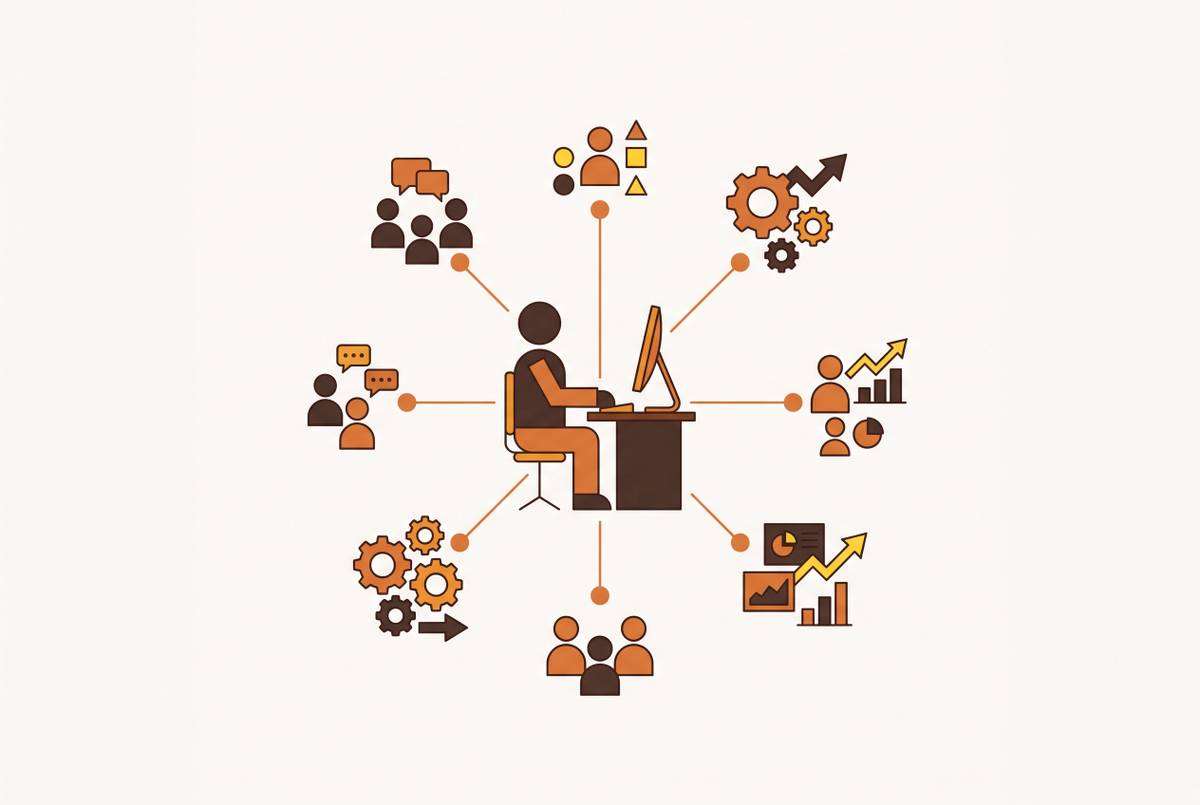
A working system connects five jobs that most non-designer marketers currently do separately, inconsistently, and usually under pressure: capturing ideas before they're needed, planning a weekly portfolio instead of posting on impulse, drafting with voice constraints so AI doesn't flatten the point, producing visuals fast enough to keep pace with the calendar, and feeding performance data back into the next round of decisions.
Most content programs fail in the seams between these jobs. Analytics sit in a dashboard nobody opens before the next draft gets written. Ideas get thought of in the shower and forgotten by the time there's a laptop open. Publishing depends on whichever team member happens to remember it's Thursday. Fixing that isn't about working harder at any one job, it's about building the connective tissue between all five so the system runs even on a week when nobody has a great idea.
The four sections that follow take each of these layers in turn, starting with the one that ends the blank-page problem for good.
Building a source library so you never start from a blank page
The fix for the blank page is embarrassingly simple to state and genuinely hard to practice: capture material continuously, before it's needed, so that drafting turns into selecting and arranging rather than inventing something under deadline pressure. Most marketers treat ideas as things that strike, like weather. Treat them instead as things that get logged, like inventory.
The best LinkedIn posts rarely start as a prompt typed into a blank box. They start as evidence: a prospect who changed their mind mid-call, a client asking the same question for the third time this quarter, an A/B test that came back backwards from expectation, a team that learned something expensive the hard way. These moments carry two qualities that generic AI output can't fake, specificity and tension, and that combination is what makes a reader stop scrolling.
A capture note doesn't need to be elaborate. Four fields do the job: what happened, who it helps, why it matters right now, and what proof backs it up. A note missing any of those four fields is too thin to draft from later, no matter how promising it felt in the moment. The four-field structure isn't a productivity hack, it's a filter. It forces whoever is capturing the idea to answer the questions a reader would ask anyway, so half the drafting work is already done by the time the idea reaches the page.
Sales calls, support tickets, webinar Q&A, and project retrospectives are the richest veins of this kind of material, mostly because nobody sets out to make them quotable. The single most post-ready shape an idea can take is the before-and-after insight: an assumption that used to be true, and the specific thing that proved it wrong. That structure comes pre-loaded with narrative tension, the same way a magic trick is more interesting once you've seen the setup fail. It also happens to be close to impossible for a competitor to copy, since it's drawn from something that actually happened. Once this habit is running, posting day stops being an invention problem. It becomes a matter of flipping through a stocked library and picking what fits.
Planning a weekly content portfolio that balances reach, authority, and conversion
A library full of raw material still needs somewhere to go, and this is where the weekly portfolio earns its keep. Instead of asking "what should I post today," the marketer asks "which slot does this week's library fill," which sounds like a small reframe but removes an entire category of decision fatigue in one move.
A workable weekly model assigns three posts three different jobs. One is a discovery post built to reach past the marketer's existing network and pull in people who've never seen the name before. One is an authority post that works through a genuinely hard problem in enough depth to make the expertise obvious. One supports conversion, helping a reader who's already interested figure out what to do next. Each of these jobs pulls from a different register of material and naturally wants a different format: discovery tends to work best as video or a sharp hook-led text post, authority suits a document carousel where the structure can breathe across several slides, and conversion usually works better tight, as a short text post or a single one-pager.
That rotation is the system's built-in defense against the algorithm's penalty for repetitive formatting, making format variety a structural default baked into the plan rather than a judgment call someone has to remember to make. Posting between two and five times a week is the frequency range that tends to produce the best results, and quality drives reach more than raw volume does. The three-job model enforces that quality constraint almost without trying, because it forces a choice from the stocked library covered in the previous section rather than a scramble for whatever idea surfaces first.
Batching is the operational partner to this plan, a separate, deliberate habit. Producing four to six posts, or visual assets, in one sitting builds a buffer that absorbs the week-to-week swings in energy and schedule that quietly kill most posting streaks. One solid piece of source material, a client video, a case study, a sharp framework, can become four different things: the original post, a carousel that distills the key points, a text post that expands one argument from it, and a short clip pulled from the same footage. The weekly portfolio plan decides which of those four runs in which slot, so the batching session produces a week's worth of range from a single afternoon's work.
Drafting with AI in a way that preserves voice and produces usable first drafts
AI earns its place in this system at the drafting stage, but only under one condition: it needs structured input, not an open invitation to fill a blank page on its own. Feed it source material, who the reader is, a clear claim, the evidence behind it, and some constraint on voice, and it can produce something usable. A vague prompt produces what might be called the AI template effect, the slightly-too-polished, slightly-too-generic post that both readers and the algorithm have learned to recognize and scroll past. LinkedIn has been flooded with exactly this kind of post over the past couple of years, so the bar for sounding like an actual person has, paradoxically, gotten higher the more AI tools have entered the picture.
A useful brief for an AI draft is short, almost terse: who the reader is, what problem they have, what shift in thinking the post is trying to produce, what proof is available to back the claim, and what action the reader should be able to take once they've read it. Five inputs, not fifty. It helps just as much to state what the AI should avoid as what it should include: invented experiences that never happened, numbers with no source behind them, a tone of certainty the evidence doesn't support, fake vulnerability performed for engagement, and the recycled clichés that infest half the posts in anyone's feed. Skipping those guardrails will likely produce precisely the problems they were meant to prevent, since nothing in an open-ended prompt stops the model from reaching for the most statistically probable, most generic version of the idea.
The parts of the post that actually matter stay with the person writing it, not the tool. The central claim and the evidence behind it have to come from something that actually happened, since that's the one thing AI can't manufacture convincingly. The review step, the judgment call about whether a given post is accurate, fair, and worth putting a name on, belongs to a human for the same reason. What AI is genuinely good at is organizing an argument that already has a spine, proposing a few alternate framings, and adapting one strong idea into the other formats the weekly portfolio calls for. Asking it for three or four different hook directions before asking for a full draft is a small habit with an outsized effect: it separates the strategic decision (how should this post open) from the mechanical one (write me a full draft), and that separation alone cuts down on the temptation to just take whatever the model hands back first.
One more check belongs in the process before anything gets published: a critique pass that asks whether the hook earns attention honestly, whether the evidence actually supports the claim being made, and whether the reader walks away with something they can use. That pass is the quality gate. It separates a post that was worth writing from one that simply pads out the feed for another day.
Producing on-brand visuals at the speed the content calendar demands
For a marketer with no design background, this is usually where the whole system stalls out. The draft is finished, the idea is sharp, and then it sits there because turning a short draft into a carousel or a one-pager takes design skills and hours nobody budgeted for.
Document posts and carousels happen to be among the formats that generate the most engagement and the highest save counts, the exact signal established earlier as the most valuable one on the platform. That puts non-designer marketers in an uncomfortable spot: skip these formats entirely and give up the platform's best-performing content type, or attempt them without a repeatable process and end up with visuals inconsistent enough to undermine the brand they're supposed to support. Neither option is good, and most marketers, without realizing it, end up choosing the first by default simply because the second feels too slow to sustain week after week.
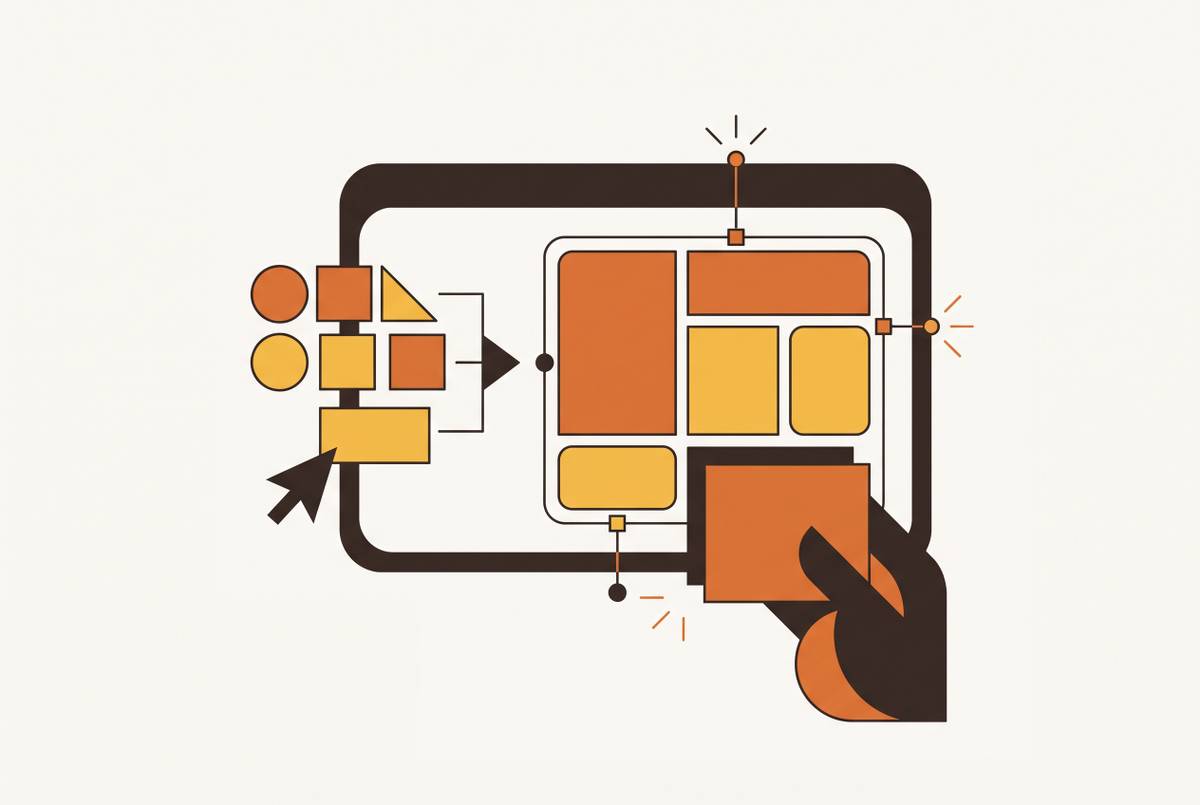
A brand kit is the mechanism that breaks that standoff. Lock down typography, color, logo placement, and layout rules once, and every asset produced afterward starts from that same foundation instead of a blank canvas that has to be rebuilt from nothing each time. An AI design platform built around editable outputs lets a marketer fill in a brand-locked template and produce a finished carousel slide, one-pager, or social graphic in a few minutes.
What actually matters here is editability. A static AI-generated image is a dead end: the moment the copy changes or the brand guidelines get updated, that image is obsolete and has to be regenerated from scratch, often with no guarantee the new version looks anything like the old one. A living, editable file can be opened back up, adjusted, and reused across months of the content calendar without starting over each time.
Template systems solve the same underlying problem the weekly portfolio solves, just one layer down. Once a carousel template, a quote-card format, and a framework-summary layout exist inside the brand kit, the marketer's job on any given day shrinks to populating a variant of something that already exists, not designing a new thing from nothing while a publish deadline closes in. That's the whole system working as intended: decisions get made once, in calm conditions, so that execution on a busy Tuesday is a matter of filling in a template rather than inventing a post from a blank page, a blank calendar, and a blank canvas all at the same time.