Brand Consistency Across Social, Slides, and PDF Outputs
AI accelerates brand drift unless teams lock rules into templates before scaling output.
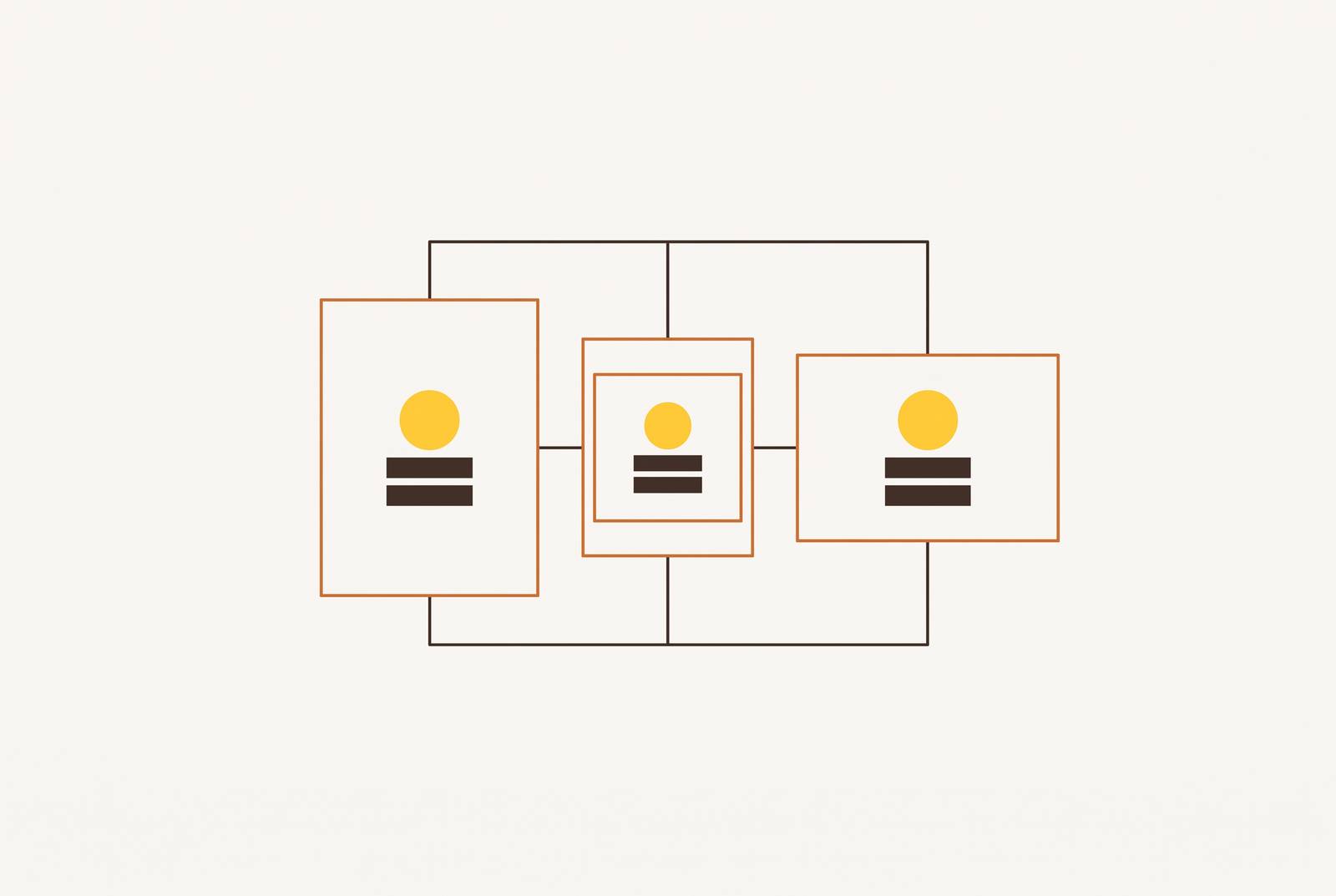
Brand consistency breaks down because the rules a team agrees on in a meeting never make it into the tools people actually use to build things. It is a museum exhibit nobody visits until the day before a board meeting.
Why brand consistency breaks down in practice
Picture a chief of staff opening the slide deck a salesperson just sent to a prospect, then scrolling back to the social post the marketing team published that same morning. Same company, same logo in the corner, same stated mission. Nobody did anything wrong on purpose. That gap between the two assets is the whole story of brand drift, and it rarely starts with carelessness.
It starts with ambiguity. Vague language is the seed of every downstream problem, and it is planted early, usually by people with good intentions and limited time.
From there, drift moves in stages. None of this requires anyone to have ignored the brand guide. It only requires the guide to have no mechanism for following people into the tools where the actual work happens.
Why AI tools accelerate the drift problem
AI did not invent brand drift. It just built a faster conveyor belt for it. Generative tools let a single marketer produce in an afternoon what used to take a small team a week, and that volume increase outpaces the governance most teams have in place to manage it. The slow drift described above, the kind that took quarters to become visible, now happens inside a single sprint.
Speed stopped being the hard part. Most of the industry has AI-generated volume without anything resembling AI-governed consistency. The guardrails are rarely more than an afterthought.
Creative teams have moved past the experimental phase, the one where a single designer tried a tool out of curiosity, and now embed AI across design workflows, content production, personalization, collaboration, and rapid prototyping. Creative teams can now generate branded output at volume, but keeping that output brand-consistent at scale is a separate, mostly unsolved problem.
Most AI branding tools operate at what might be called the generation layer: feed them a prompt and a style reference, and they produce an asset. Brand kit features inside these tools might seem like they close the loop, but storing a logo and a hex code is not enforcement. Enforcement means those rules apply automatically, every time, across every format and every author, without someone having to remember to paste them into a prompt. Teams that solve this governance question before scaling their AI output get the speed benefit without paying for it later in rebranding fatigue.
What a brand rule system needs to contain to be enforceable
A rule system earns the word "enforceable" only when it's specific enough for a machine, or an intern on their first week, to apply it the same way every time. Three layers make up a functioning brand system, and most teams only ever build the first one properly.
The first layer is the rule set itself: exact color values (hex codes, not the word "navy"), named font pairings, logo usage specifications for light and dark backgrounds, image style guidelines, a defined tone of voice, and layout constraints that hold up across formats. The third layer, consistency enforcement, checks a rule set against a whole body of outputs produced over time and flags where something has drifted. This third layer is the one missing from most setups, and its absence is why brand kits full of logos and hex codes still don't stop drift in practice.
For distributed teams where most authors aren't designers, the brand kit works as the enforcement mechanism only when it's narrow and specific: a handful of exact logo files, two or three locked color values, and the precise names of two or three fonts, saved once so every new design pulls from them automatically instead of from someone's memory of what the brand "sort of" looks like. IBM's open-source Carbon design system is a useful reference point here: it runs on token-based theming with reusable components and governance strict enough to keep output consistent across a large and varied set of contributors, which is a fair proxy for what a go-to-market team with twenty non-designers is trying to pull off on a smaller scale.
What separates a brand whose output all looks like one company from a brand whose output looks like five is simple to state and hard to achieve: does the rule system travel with every author into every tool, or does it live in a PDF that a designer reads once and everyone else never opens again?
How brand rules apply across social posts, slide decks, and PDFs
One rule set, three different jobs. Consistency doesn't mean a social post and a PDF look identical; it means they're recognizably the product of the same underlying decisions, adapted to what each format actually demands.
Social is the most compressed test. A practical approach: build one hero visual per campaign, then let that asset spin off into short clips, carousels, or simple animations for the feed. The hero carries the rule; everything downstream inherits it.
Slide decks work on a longer arc. Consistency here gets enforced through master slide templates, locked headers, footers, color fills, and font hierarchies that every new slide inherits without the author touching a single design decision. That structure holds even as content changes slide to slide and deck to deck, which is exactly the point.
PDFs get less attention than they deserve, mostly because they're the format most likely to get forwarded without any context attached, a one-pager that lands in an inbox three steps removed from whoever made it. That makes a PDF the highest-stakes test of whether brand rules are actually embedded in the file or just painted onto its surface. Because PDFs are fixed-layout with no interactivity to lean on, hierarchy and typography carry more of the weight than they do elsewhere. Heading size, body size, and color rules have to be precise enough to reproduce the same way no matter who in the company exported the file.
Templates as the operational mechanism for enforcing rules across non-designer authors
Templates are the mechanism that turns a written rule into something a non-designer can actually use without a designer sitting next to them.
Brand templating takes the recurring assets a team produces, social posts, decks, one-pagers, and turns them into governed structures that let anyone on staff build something on-brand without filing a request and waiting for a designer's queue to open up. The designer's judgment gets baked into the template once, up front. Done well, this speeds up campaign launches and makes personalization at scale realistic, but only if the template is trusted enough that people use it instead of quietly building their own version in a different tool.
The failure appears fast in teams that skip governance. The fix is a clean split between locked and unlocked zones: logo placement, color fills, and font choices stay fixed, while headline copy, images, and data stay open for the author to change freely. That boundary is the brand rule, made operational.
A simple test separates a working template from a broken one: can a non-designer finish an asset without making a single design decision? If the tool asks them to pick a font or choose a color, the template has already failed its one job. AI-assisted platforms can take this further, flagging inconsistencies and suggesting fixes before something gets published, and reformatting a design for a different platform while leaving the brand elements untouched.
How AI fits into an enforceable brand system
AI belongs at the execution layer of a brand system. It belongs only at the execution layer, not at the layer where rules get decided, and teams that keep that boundary clear are the ones getting real value out of it.
The most durable way to apply AI here is to encode the brand into the tool's configuration itself, not into every individual prompt someone types. When the rules live in the tool, every author gets on-brand output by default, without needing to know the right incantation to type into a prompt box. Strategy, voice, and the judgment call about what actually lands with an audience stay human work. A useful rough number for what this looks like in practice: AI gets a team to roughly 80% on-brand, fast, and the remaining 20%, whether something truly sounds like the company and will land with the specific audience in front of it, still needs a person to close. A person directs.
For slide decks specifically, that means using AI to build the first structure of a deck, not the final version that goes out the door. A human keeps the judgment.
One honest objection deserves a straight answer: if everyone's using AI to generate assets, won't everything start looking the same? It would, if AI ran without constraints. As AI absorbs the repetitive production work, designers and creative directors get to spend more time on strategy, positioning, storytelling, and governance: a shift in what their role is for. AI is making creative teams faster. It isn't replacing the judgment that decides what fast output is actually worth shipping.
Building in-house brand consistency capability without adding design headcount
The move toward in-house production is already well underway, and the teams pulling it off built the infrastructure first: rules, templates, and a tool that actually enforces both.
That infrastructure question matters more than headcount here. For go-to-market teams, salespeople, marketers, chiefs of staff, the real gap usually is a lack of design infrastructure. Move work in-house without governed templates and a tool that enforces the brand rules automatically, and all that's happened is the inconsistency moved in-house too, now with an added layer of "but we have a whole team for this."
Agencies bring something that's genuinely hard to replicate on day one: years of cross-client pattern recognition from testing creative across dozens of accounts, plus media rates negotiated at a scale most in-house teams never reach. AI design tools narrow part of that gap by letting a smaller team build, test, and launch visual assets faster without sacrificing quality, which matters most for lean teams trying to compete against larger, better-resourced rivals without adding three more salaries to the design line.
The in-housing trend doesn't work automatically, and two recent examples make that point better than any warning could. Neither decision proves in-housing is a mistake. It proves that in-housing without the right infrastructure is a strategic bet that can fail, because the templates and enforcement tooling are what make consistency possible, same as any other operational choice made without the systems to support it. Moda's positioning sits directly in that gap: a platform built so designers set up the governed templates once and go-to-market teammates execute inside them is the infrastructure layer that makes in-house production viable without asking the design team to double in size.
A practical sequence for setting up brand rules that hold across every output format
None of this requires a reorganization. It requires a sequence, done roughly in order, with each step built on the one before it.
Start by defining the rule system with enough specificity that a machine could apply it correctly: exact hex codes instead of color names, precise font names and a clear size hierarchy, logo rules for every background type the brand actually appears on, and image style constraints tight enough to reproduce the same way across different tools and different authors. Third, assign clear governance: one person or team owns the rule system and the templates, updates them as the brand evolves, and decides what gets locked, while everyone else simply operates inside the system that's already built. That's the line between governing a brand and policing one: policing burns trust that governance never has to spend.
Fourth, pick tools that enforce rules at the platform level, not just inside an individual template, since a tool that stores the rules and applies them automatically across every output is the consistency enforcement layer most setups are quietly missing. Fifth, put AI to work at the execution layer specifically: first drafts generated from inside the governed template system, assets adapted across formats automatically, and human review reserved for the roughly 20% of judgment calls AI can't reliably make, whether a given piece actually sounds and looks like the brand in the specific context it's landing in.
The real test of whether any of this is working doesn't involve a designer in the room. A salesperson, a marketer, and a chief of staff each independently build a social post, a slide deck, and a PDF in the same week, and all three sets of output are unmistakably from the same company, with nobody checking their work before it goes out. Moda's structure is built around exactly that sequence: a designer sets up the brand system and the templates once, and every teammate after that produces finished, on-brand work across slides, social posts, PDFs, and static pages without needing design training or a designer's sign-off on each individual file.